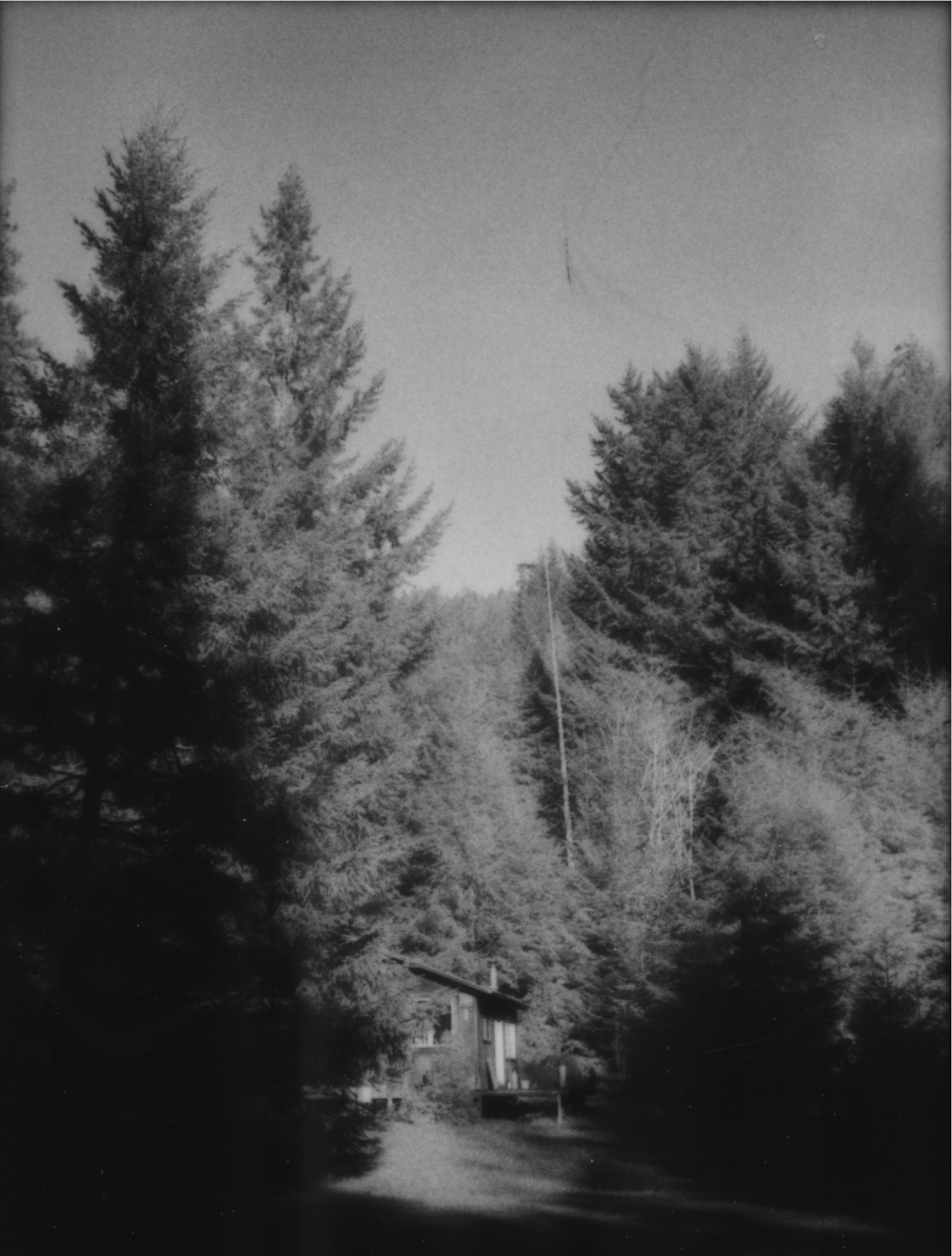
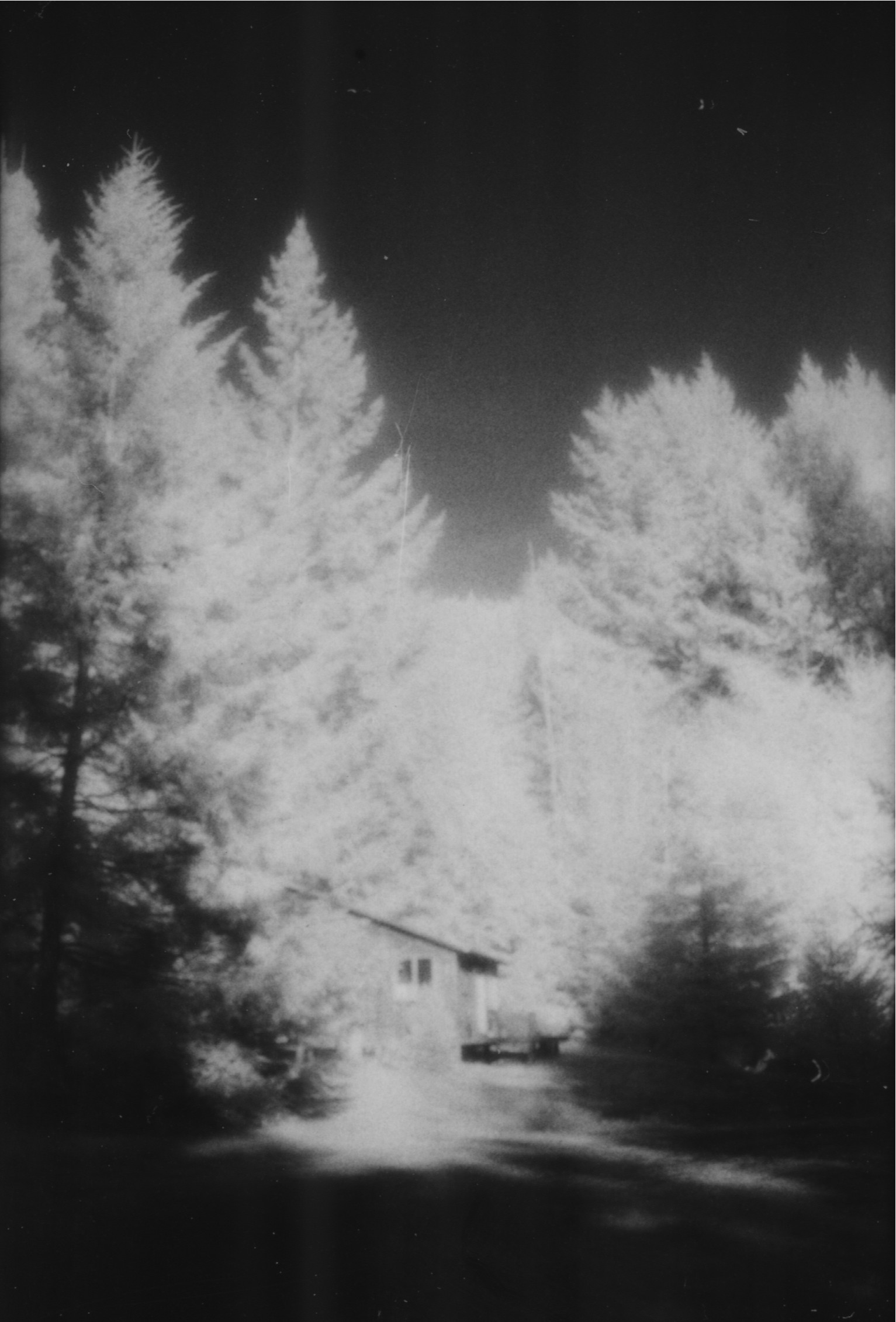
A number of pictures were taken of scenery, in order to explore an aspect of near infrared photography called the "woods effect". These pictures were taken under conditions of strong sunlight, near noon in mid February. The pictures were taken in a redwood forest near Fort Bragg, California.
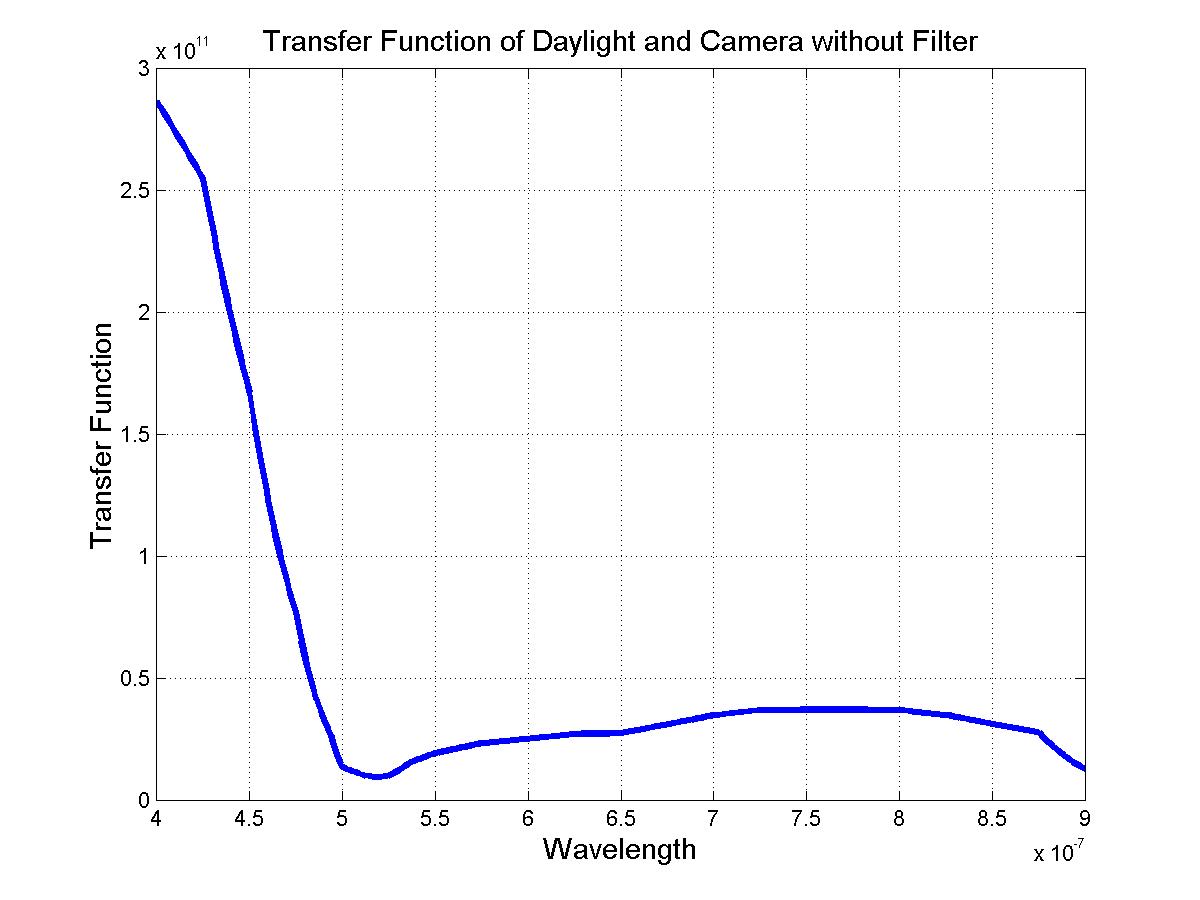
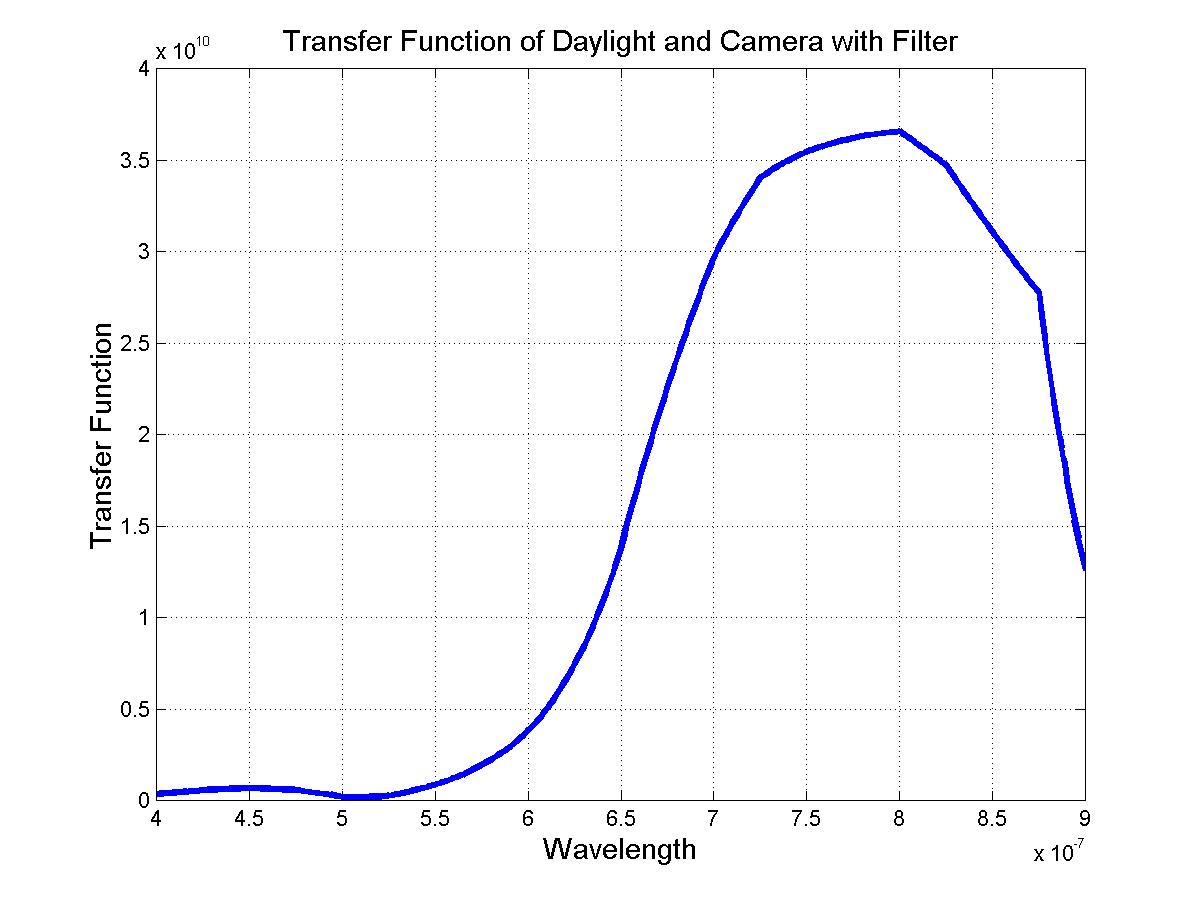
The first set of pictures shows a cabin surrounded by redwood trees. Both pictures are taken under daylight conditions, with the picture on the left without a filter on the camera, and the picture on the right with a filter. The corresponding transfer functions are shown below the pictures.
The first thing to notice is the dramatic difference in the brightness of the trees with the filter on the camera. With the filter, the system is only sensitive to wavelengths above 650nm. This means that the trees are strongly reflective of the near infrared light. Also notice that the sky is darker with the filter on. Without the filter, the transfer function shows that the exposure is highly sensitive to wavelengths between 400 and 500nm. The blue light of the sky causes the film to be exposed. The filter does not let these wavelengths through, and the sky correspondingly looks much darker. The ability of near infrared photography to bring out the trees from the background is often used to study foliage, and is sometimes referred to as the Woods effect.
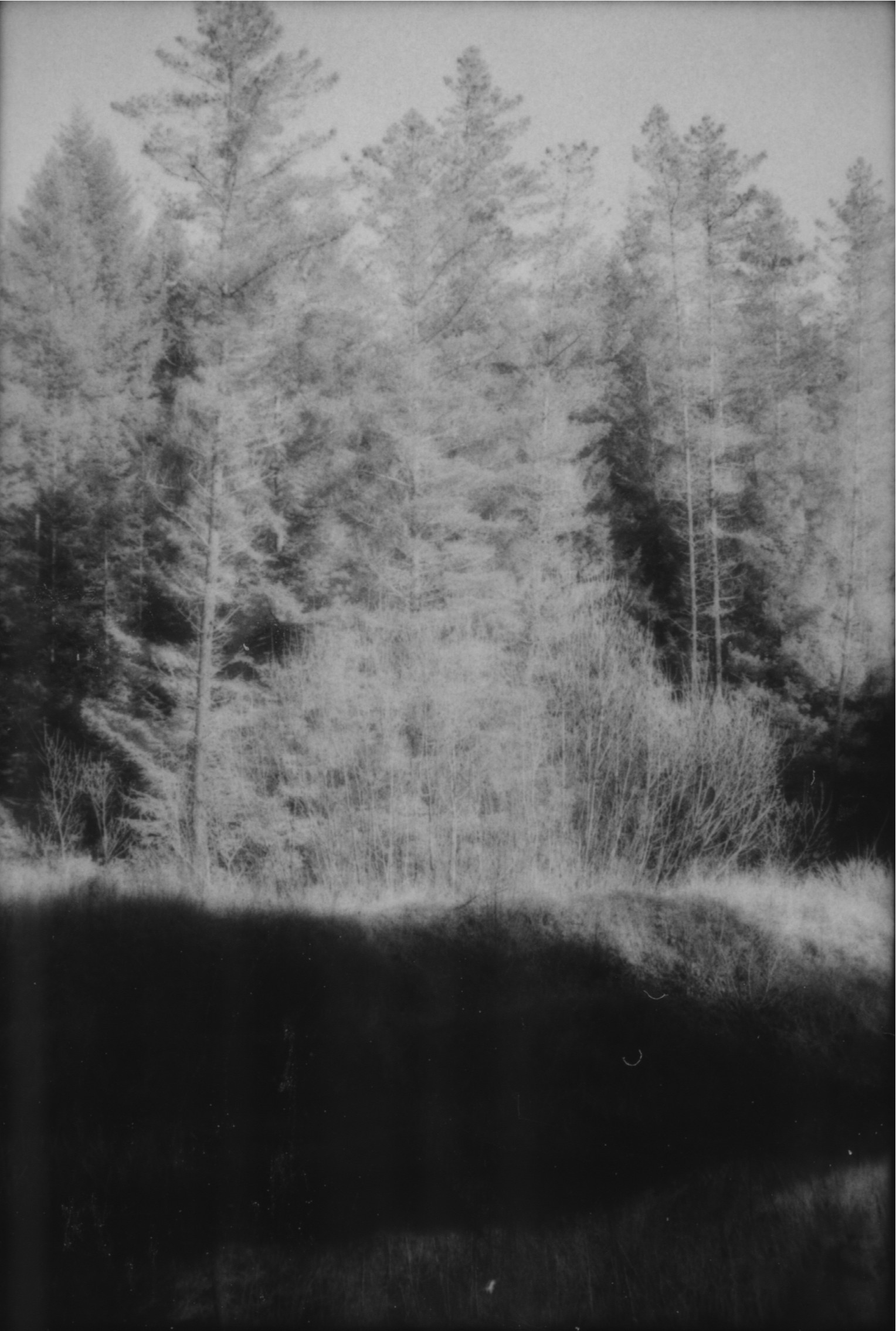
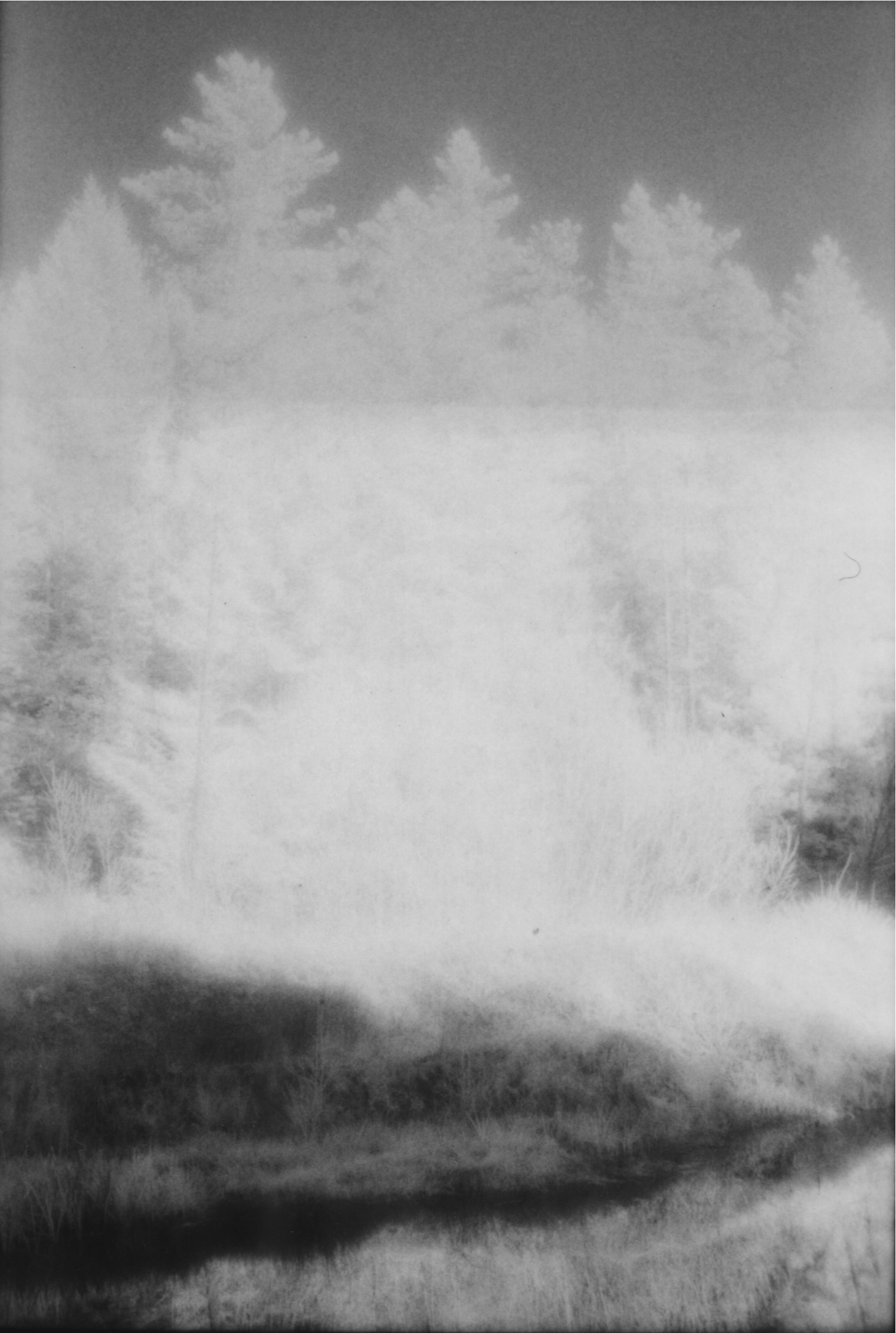
These pictures are again of redwood trees, looking over some brush in the lower part of the image. Both pictures are taken under daylight conditions, with the picture on the left without a filter on the camera, and the picture on the right with a filter. The corresponding transfer functions are shown below the pictures. The picture on the right has a line across the top, and is darker in the upper third. This is an error caused either by the photographer or in the developing of the film. There is another filtered shot in Appendix I that is of the same scene that does not have this artifact, but the exposure is not as bright.
Again, there is a dramatic difference in the brightness of the trees with and without the filter. With the filter, the trees are now bright white, meaning they have a high reflectivity for near infrared light. The sky is again dark, meaning the blue visible light is filtered out. But notice that the bottom of the image is now visible with the filter on, while it is not without the filter. This section was in the shade, and not enough visible light came through in the first exposure compared to the sky or trees to be visible. But with the filter, the bushes reflect enough near infrared to show up. It is interesting that this is in the shade; perhaps the shade created is mostly in the visible wavelengths, and the near infrared is not shaded and is reaching the bushes.
Home Introduction Applications Methodology Modeling Results Conclusion References Appendix I Appendix II