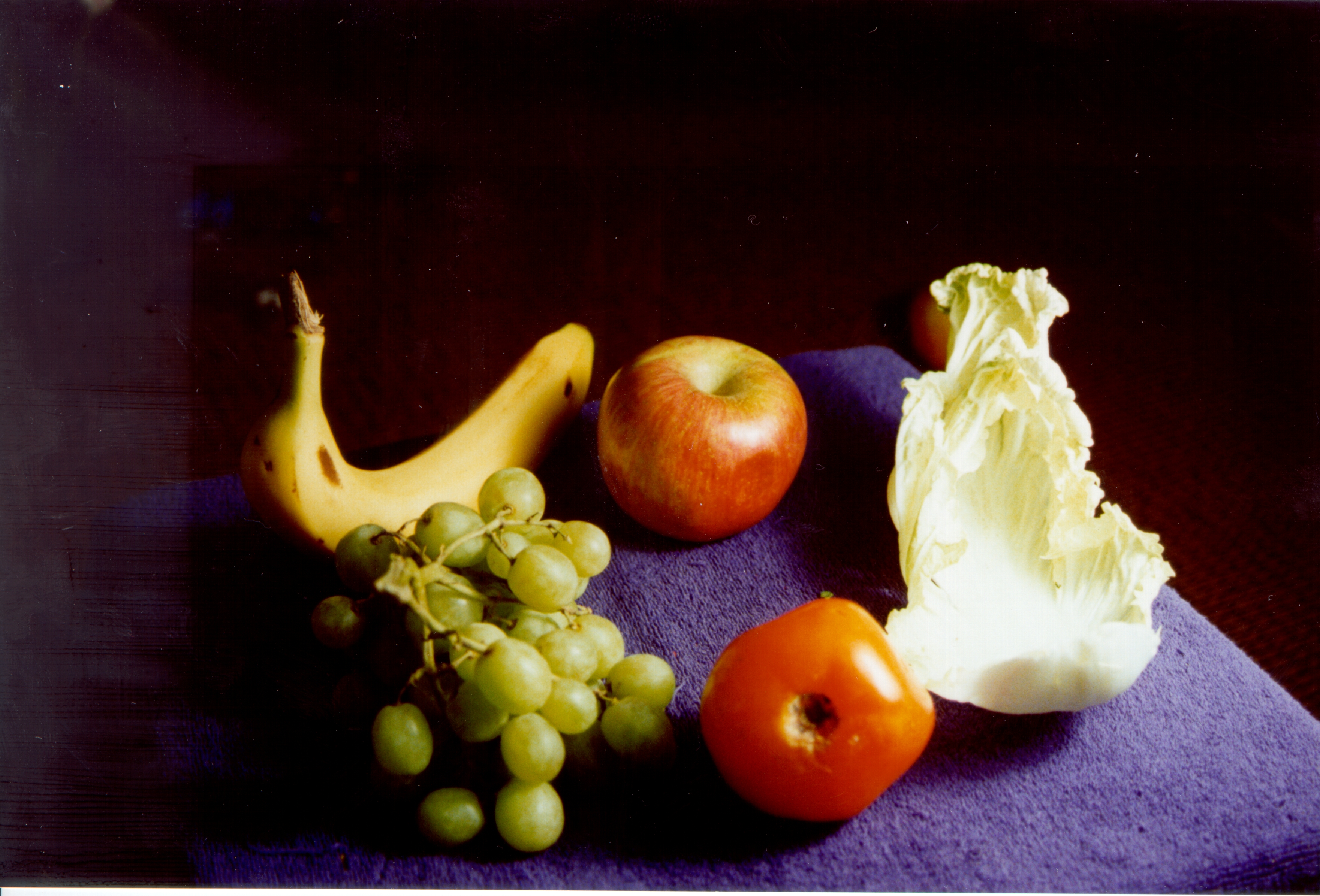
A color photograph of the fruit scene is shown above. The scene includes a bunch of grapes, a banana, an apple (in background), a tomato (in foreground), and a leaf of lettuce. Some things to note are the occasional brown spots adorning the banana and a bruise on the right half of the apple. The apple bruise is difficult to see, it appears as a flat region about as large as a thumbprint. The orientation of the fruits in the color image differs from the infrared images since we needed to move the scene between these two shots.
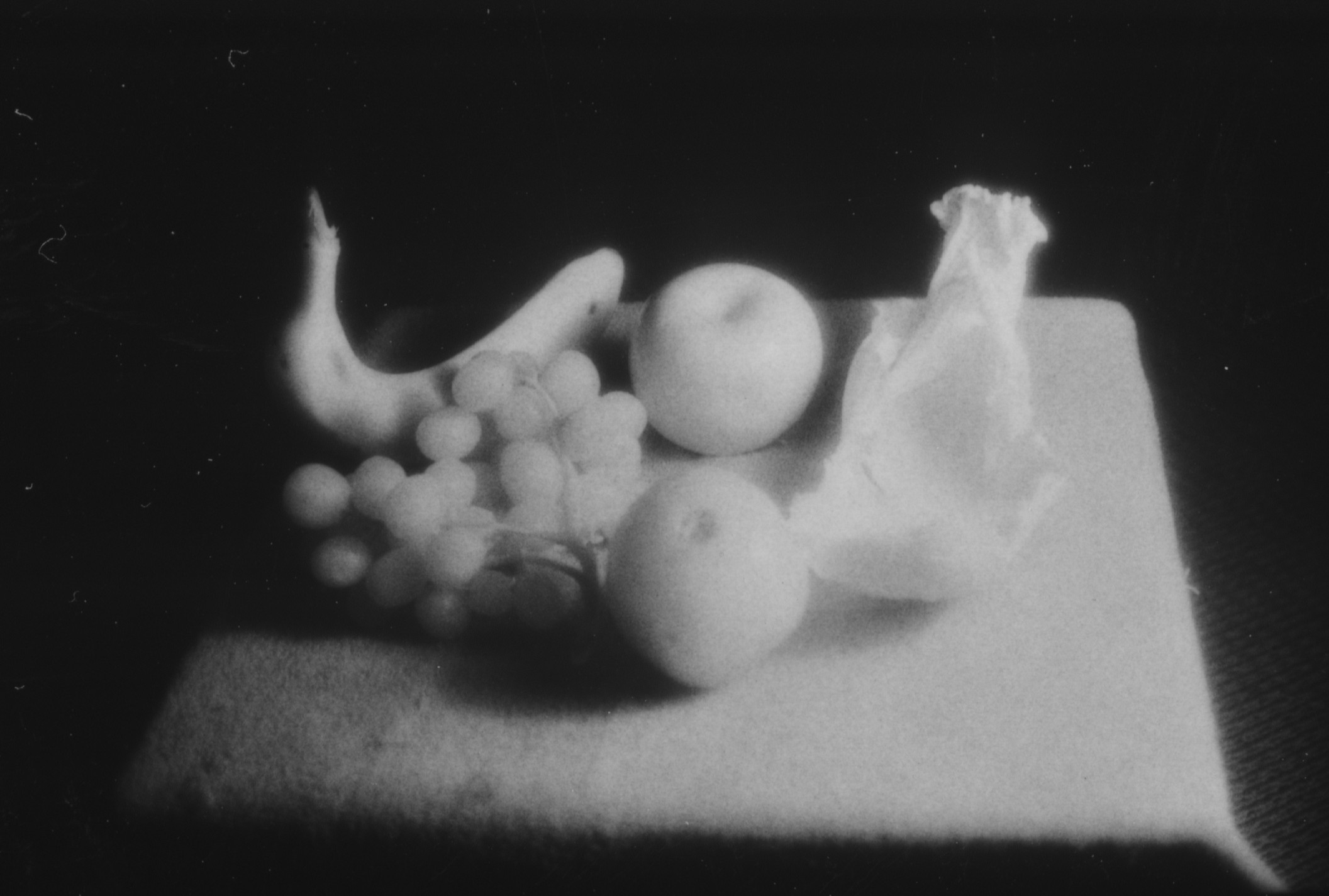
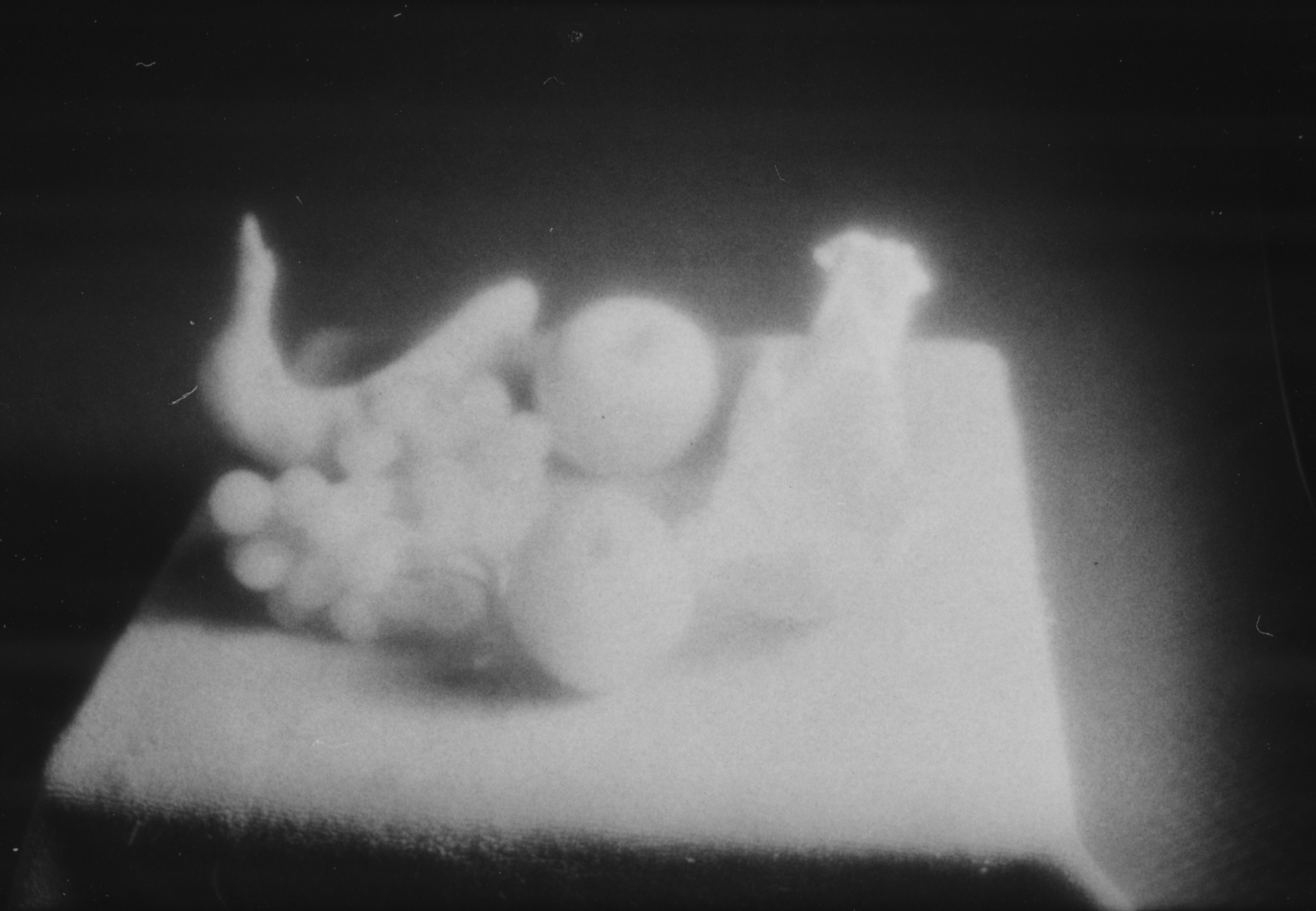
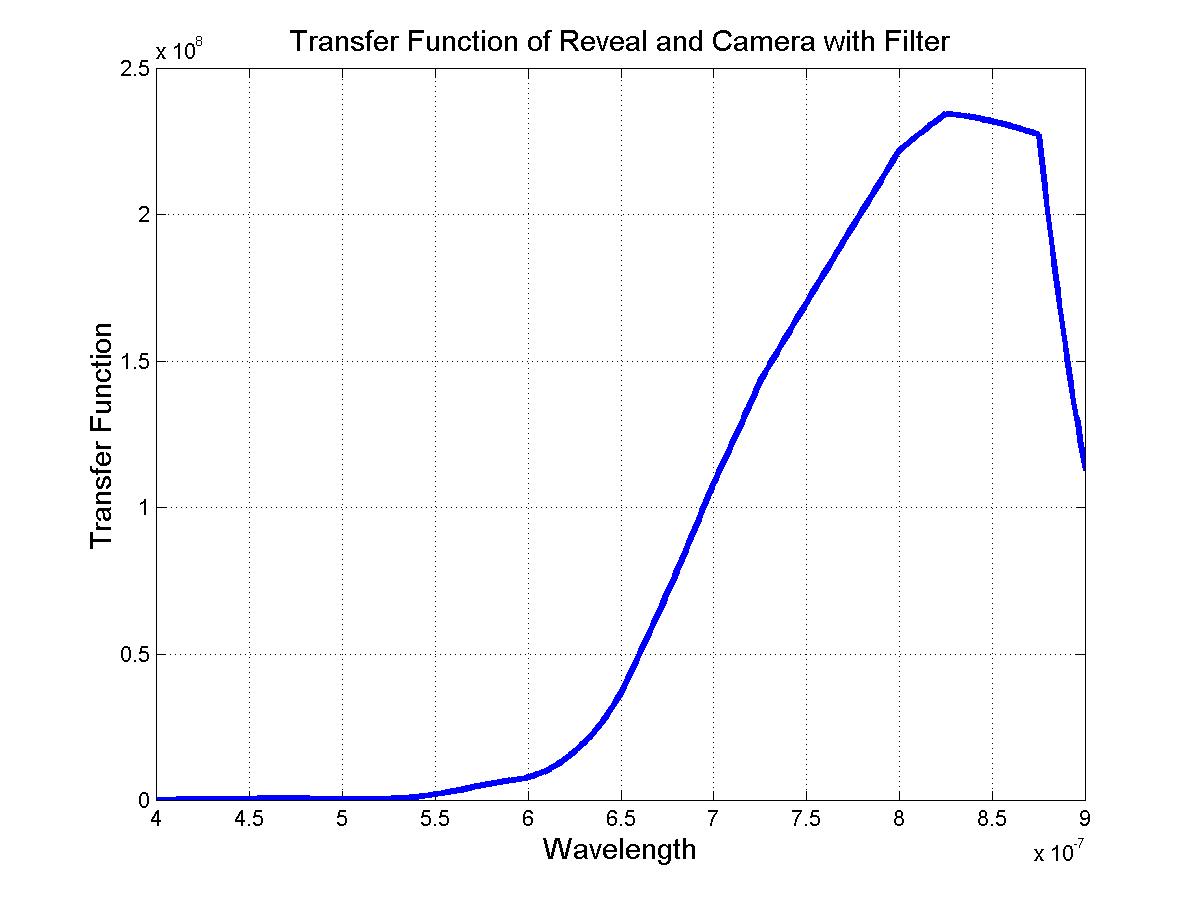
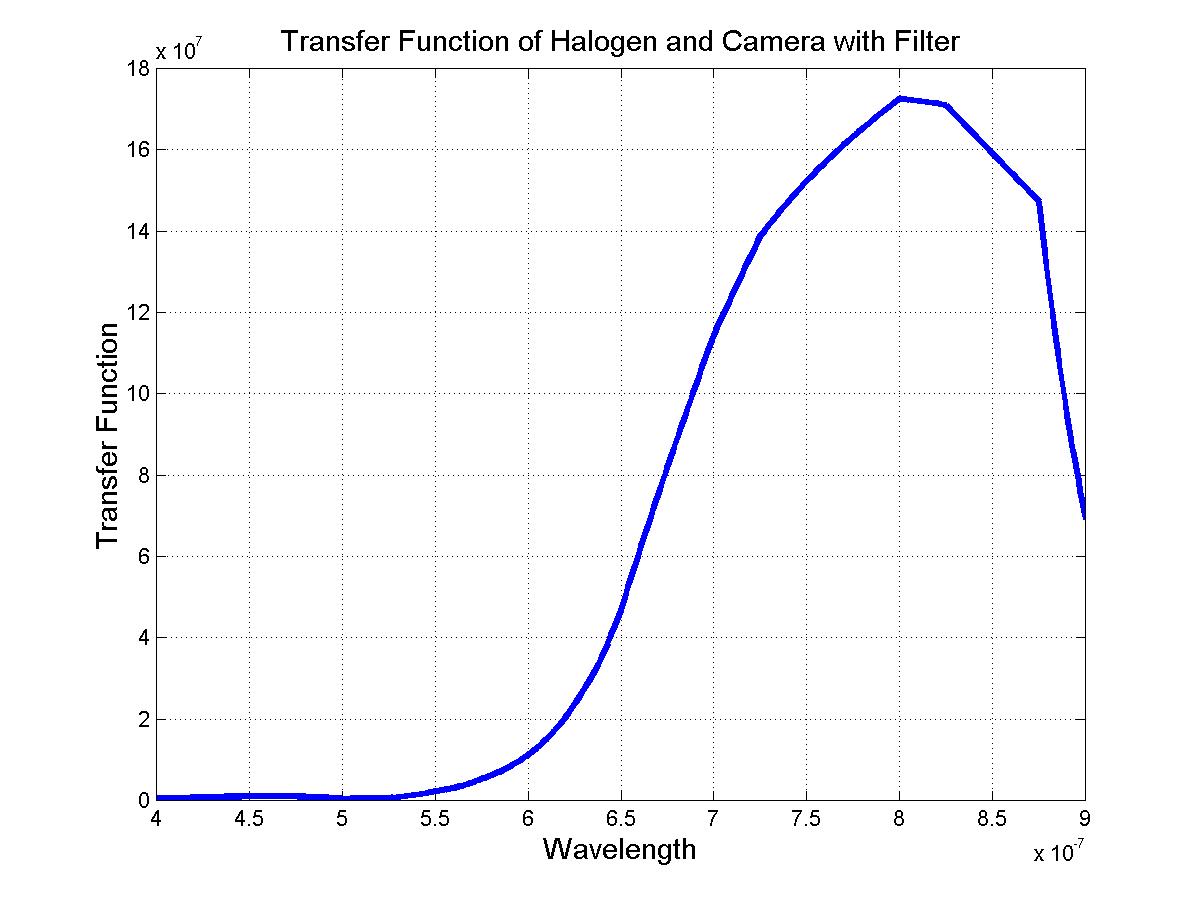
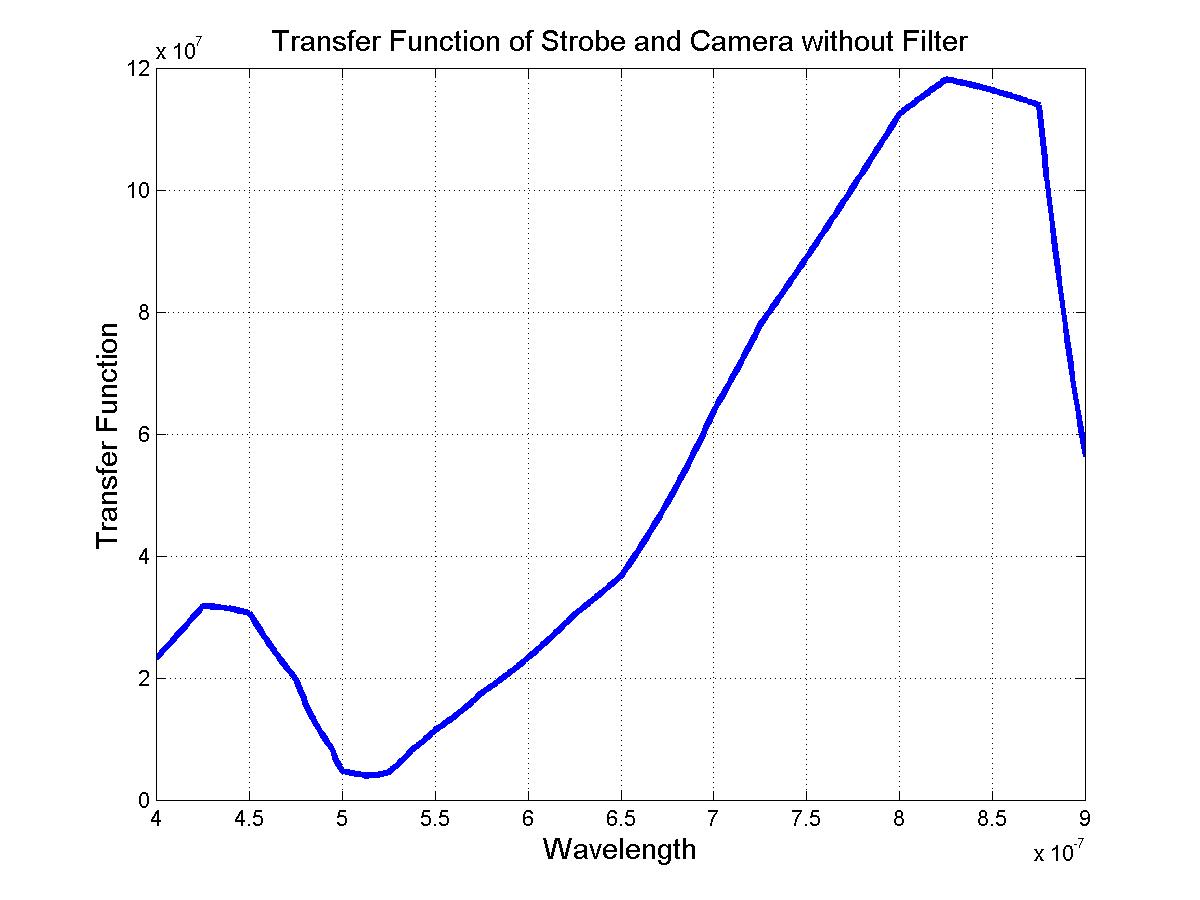
Perhaps the most telling difference between these two images is the luminance of the grapes in the filtered photograph. In the photograph without the filter the grapes appear slightly darker than the other objects; this makes sense as the green of the grapes (500nm) is attenuated compared to the yellows of the banana (570nm) and reds of the apple and tomato (600nm) even in the unfiltered case. However, though we would expect the addition of the filter to further magnify this difference, in fact after filtering the difference is diminished and the grape intensity approaches that of the apple. While this may arise from the overexposure of the photograph, it does occur in other photographs of the scene where the overexposure is less: in general grape luminance approaches that of the other objects. This suggests that while some compound gives coloration in the visible spectrum, in the near infrared regime another compound dominates; perhaps a sugar present in the fruit.
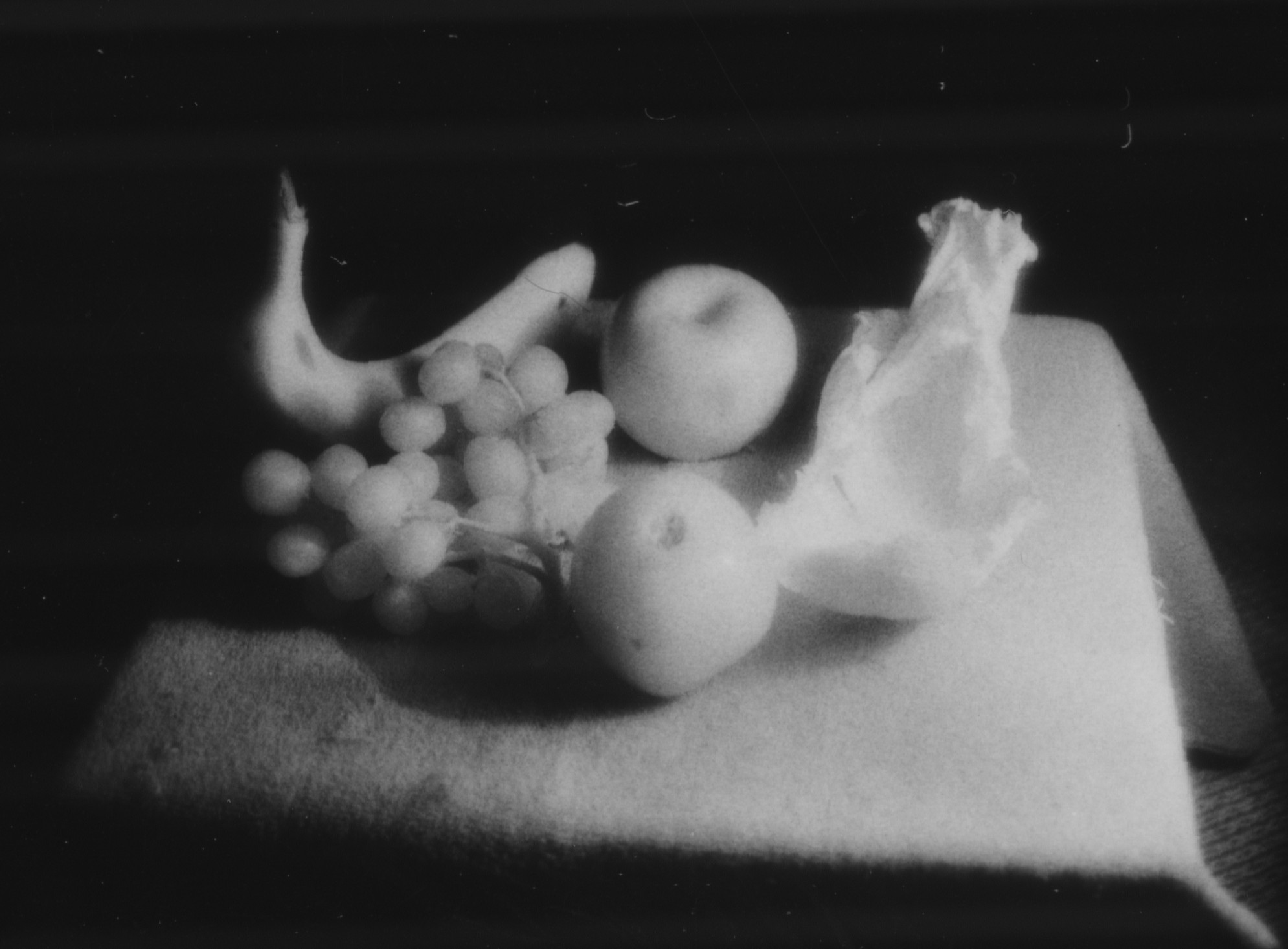
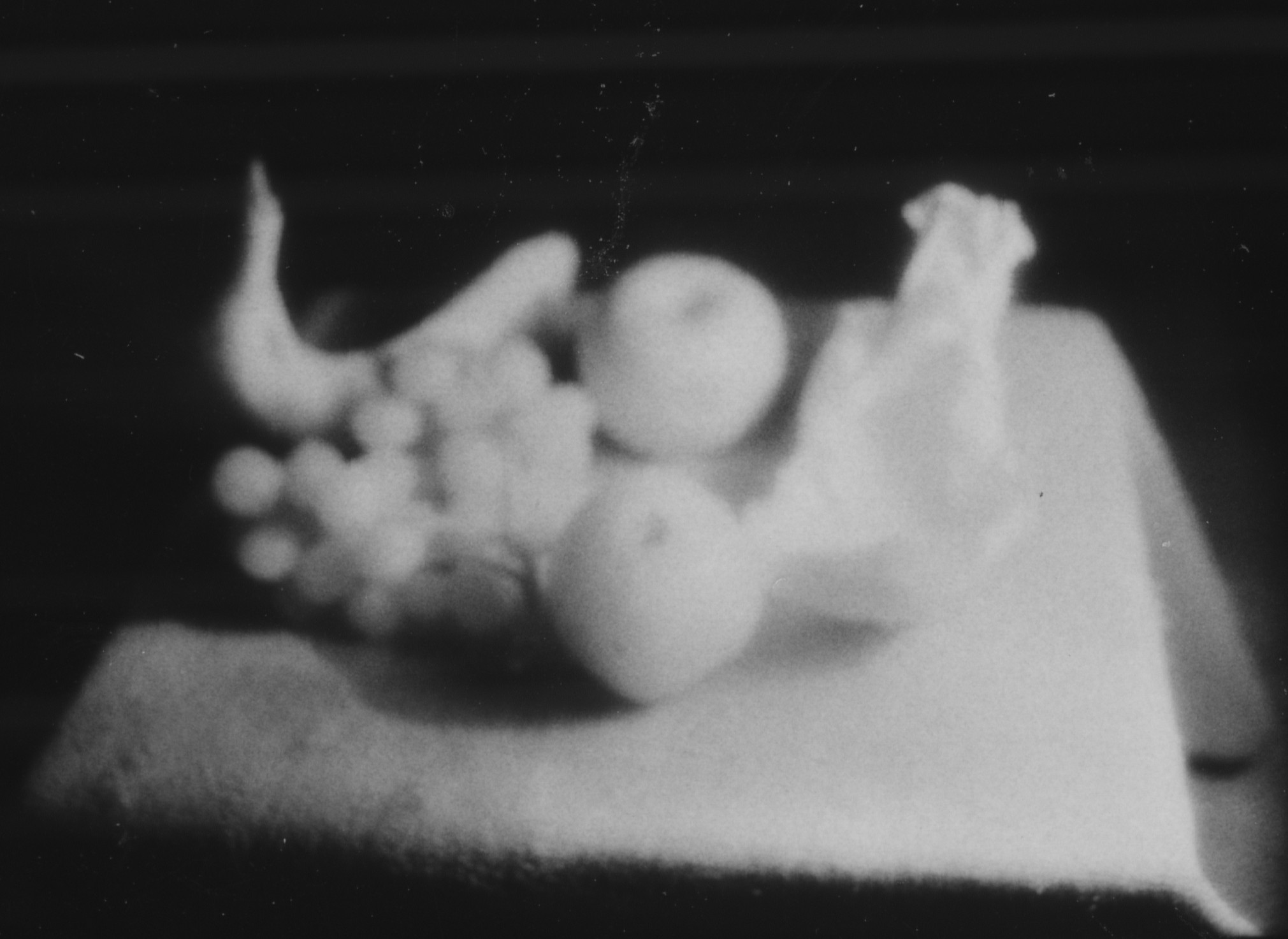
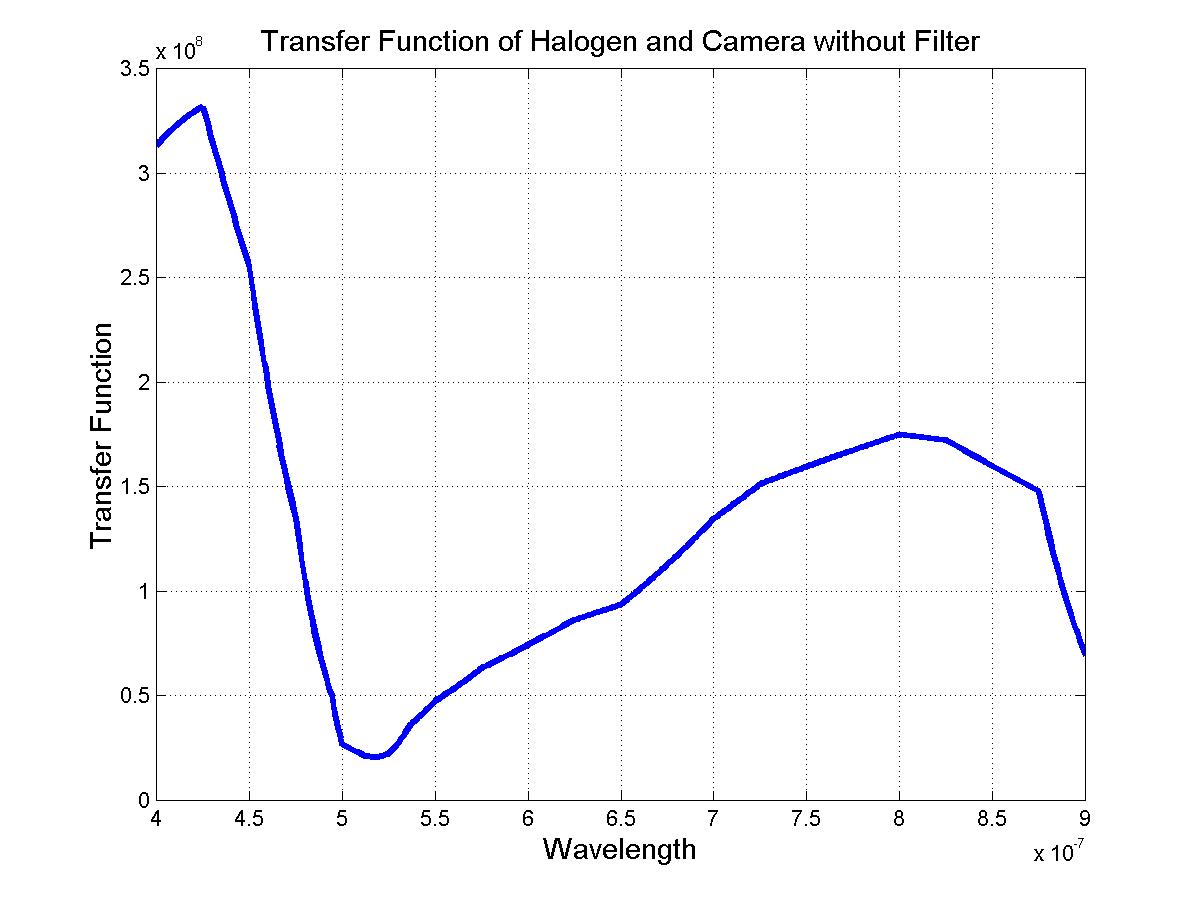
The bruise on the apple is clearly visible in the unfiltered photograph. It is barely visible in the filtered photograph, but this may be because of overexposure. For example, the banana brown spots visible in both photographs are fairly washed out by overexposure in the filtered case. Again, the grape luminance mentioned previously is evident. Also, the apple in both filtered and unfiltered cases appears to be a single hue, whereas the color photograph shows a red striped apple, the yellow-greenish background skin being clearly visible near the top of the apple. Perhaps the theorized strong infrared compound also causes the apple to assume a uniform hue, although this may also be an issue of image resolution.
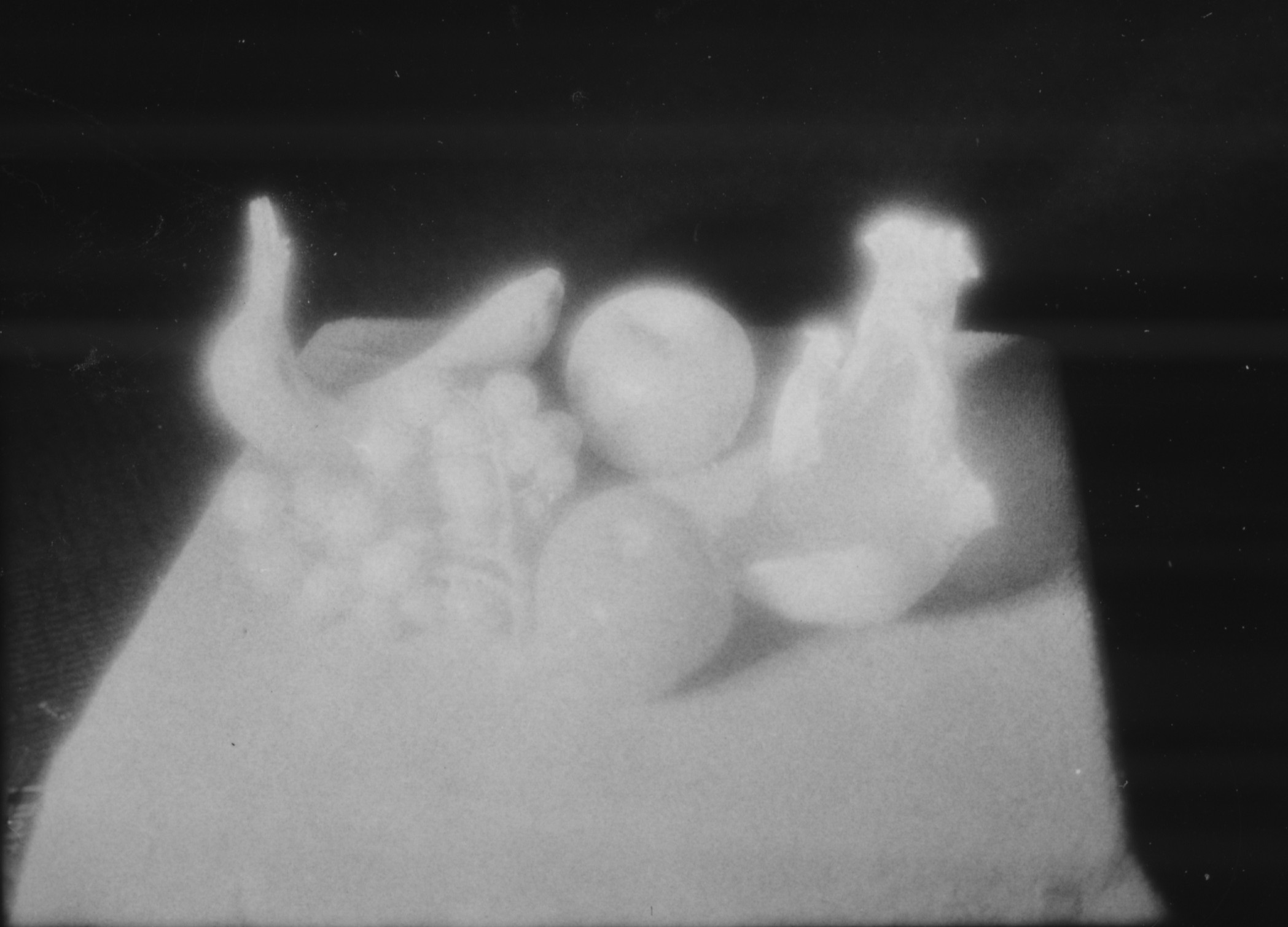
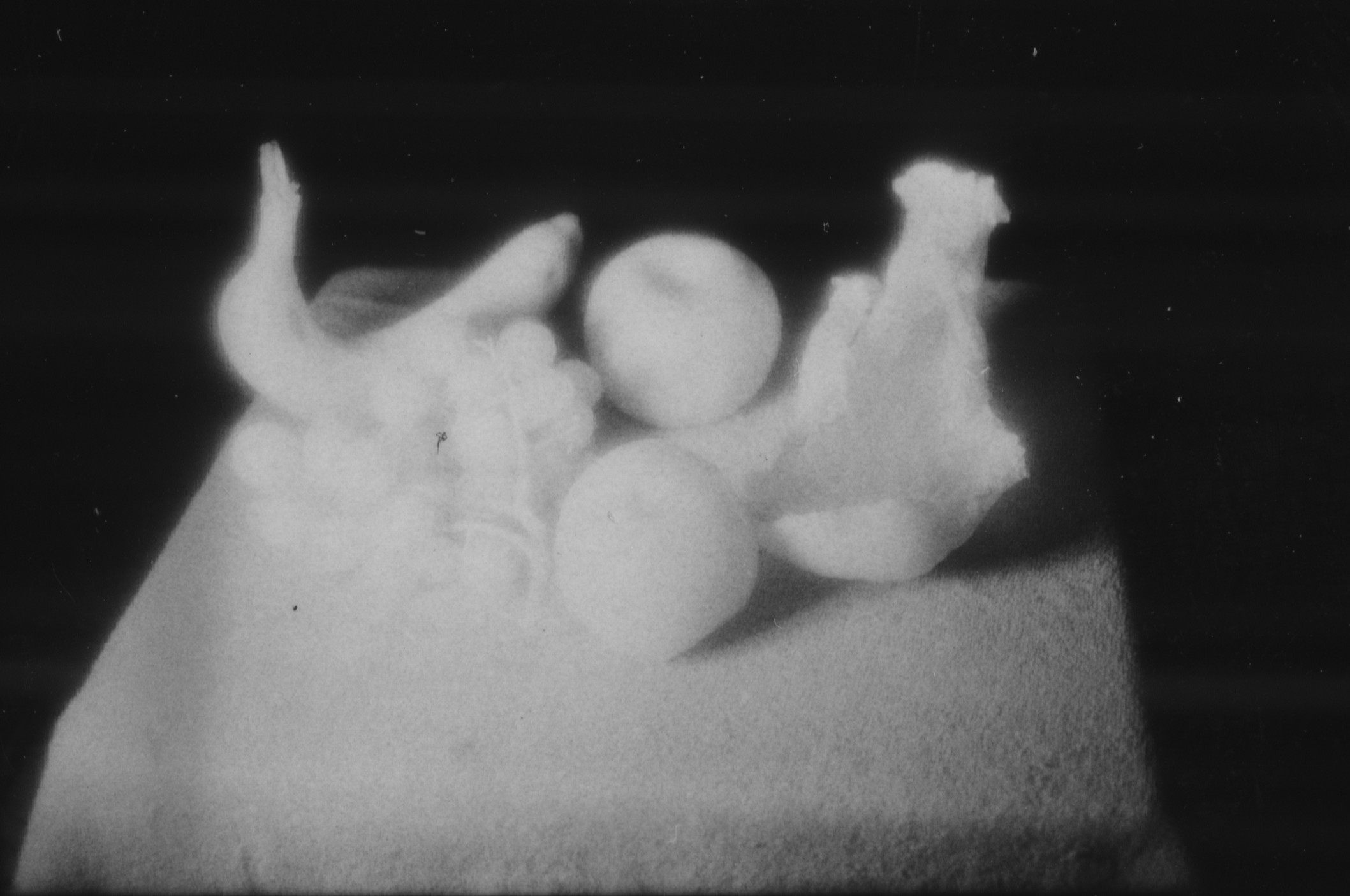
The most peculiar difference between these two photographs is the fact that the tomato appears inverted in the unfiltered case: the stem section is brighter than the surface. The tomato also appears as one of the darker objects. This is strange, especially since these two trends are not evident in the filtered case. The reason for this is not known.
Home Introduction Applications Methodology Modeling Results Conclusion References Appendix I Appendix II