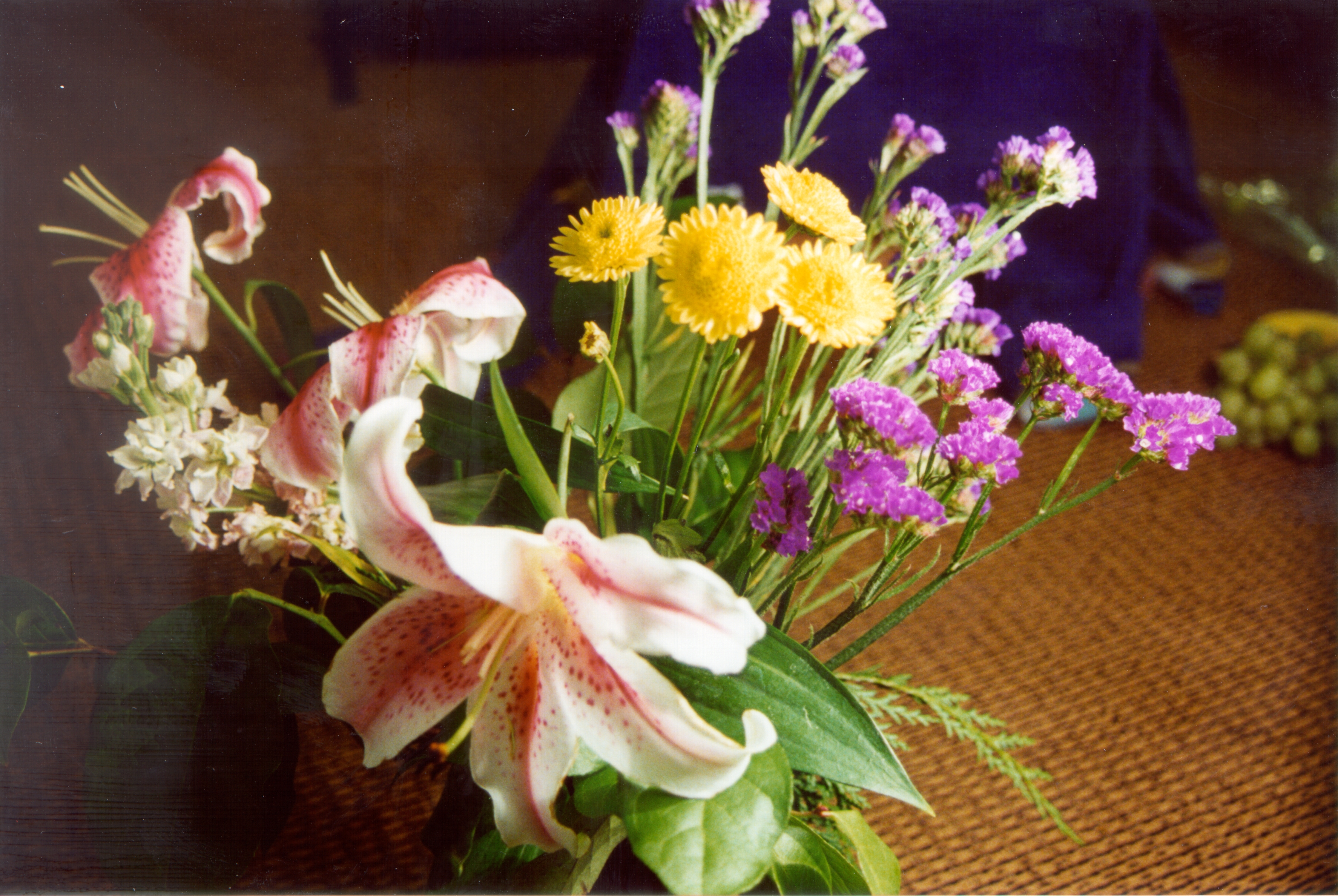
Above is a color photograph of the bouquet of flowers. The flowers were chosen due to their variance in color and to study the infrared reflectivity of plants. Included are yellow dandelions in the center, purple flowers on the right, red and white flowers to the left, and the green leaves throughout. Also notice the green leaves in the lower left corner that have very little illumination, and are barely visible with the color shot.
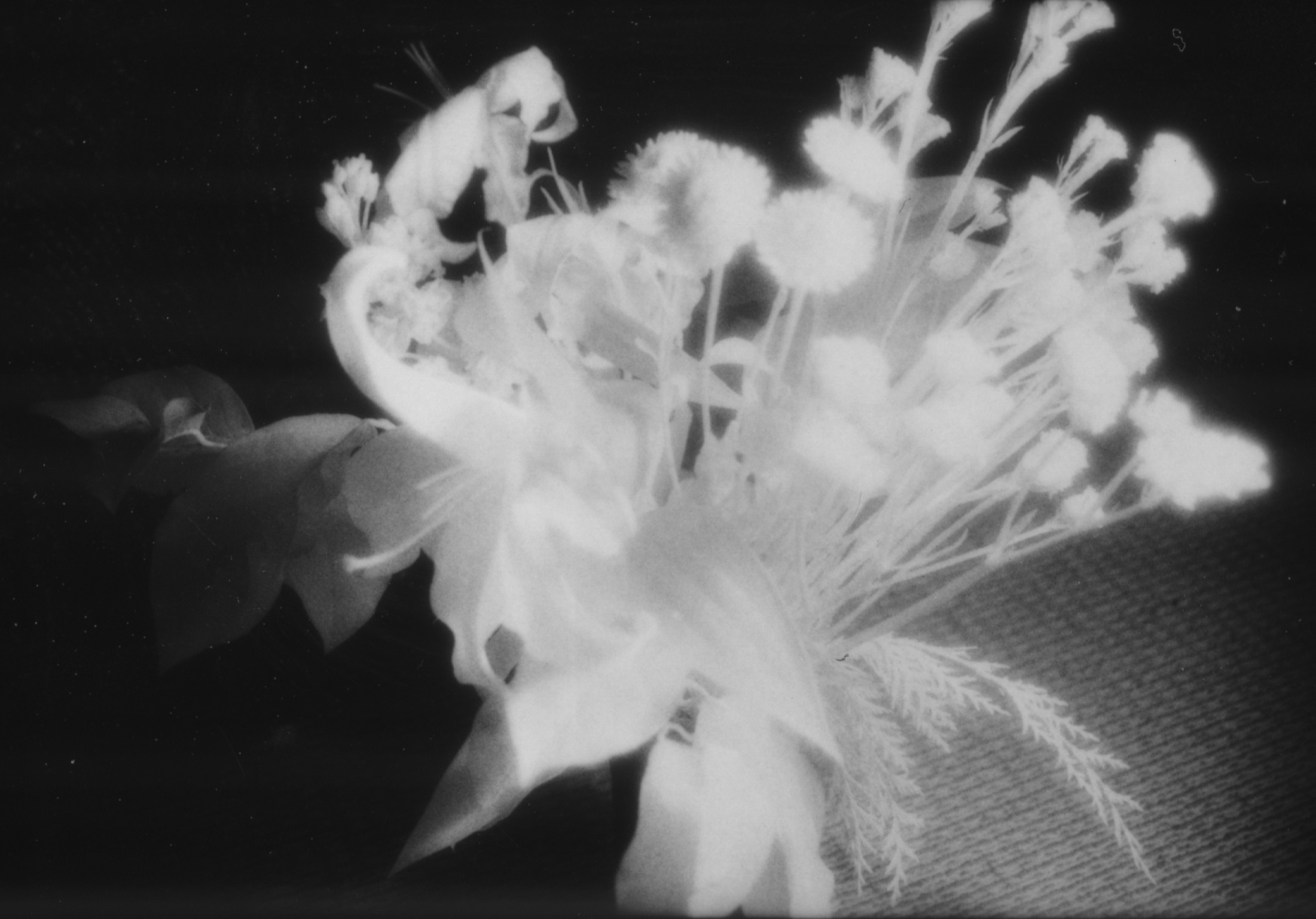
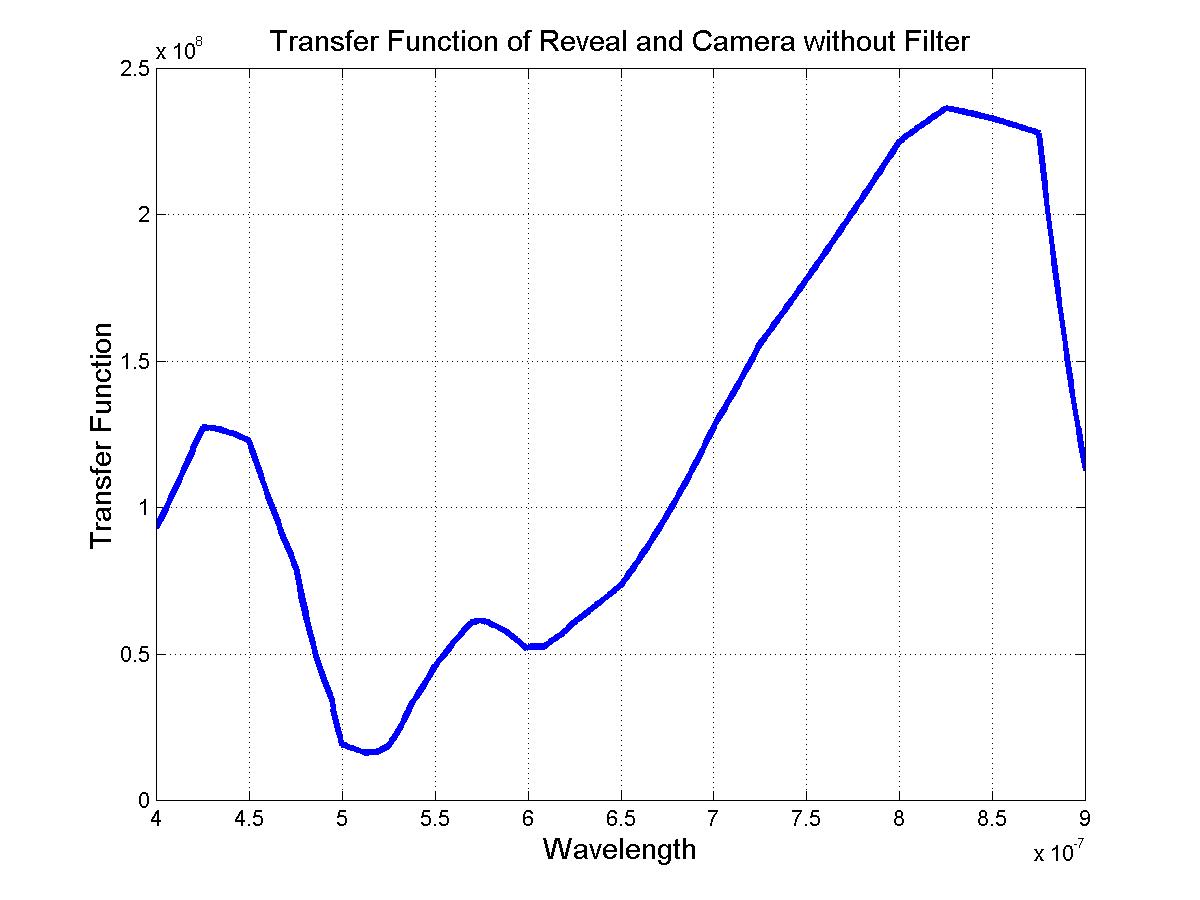
The image at left is taken with a Reveal 100 light bulb source, without a filter on the camera. The transfer function is shown below. Notice that the green leaves are not strongly visible in the image, especially on the left side of the image. This corresponds to the transfer function having a small value from 500 to 600nm. The violet flowers to the right come out brightly, due to the large value of the transfer function from 400 to 470nm. The yellow flowers come out the least bright, due to the low response of the system to light in those wavelengths.
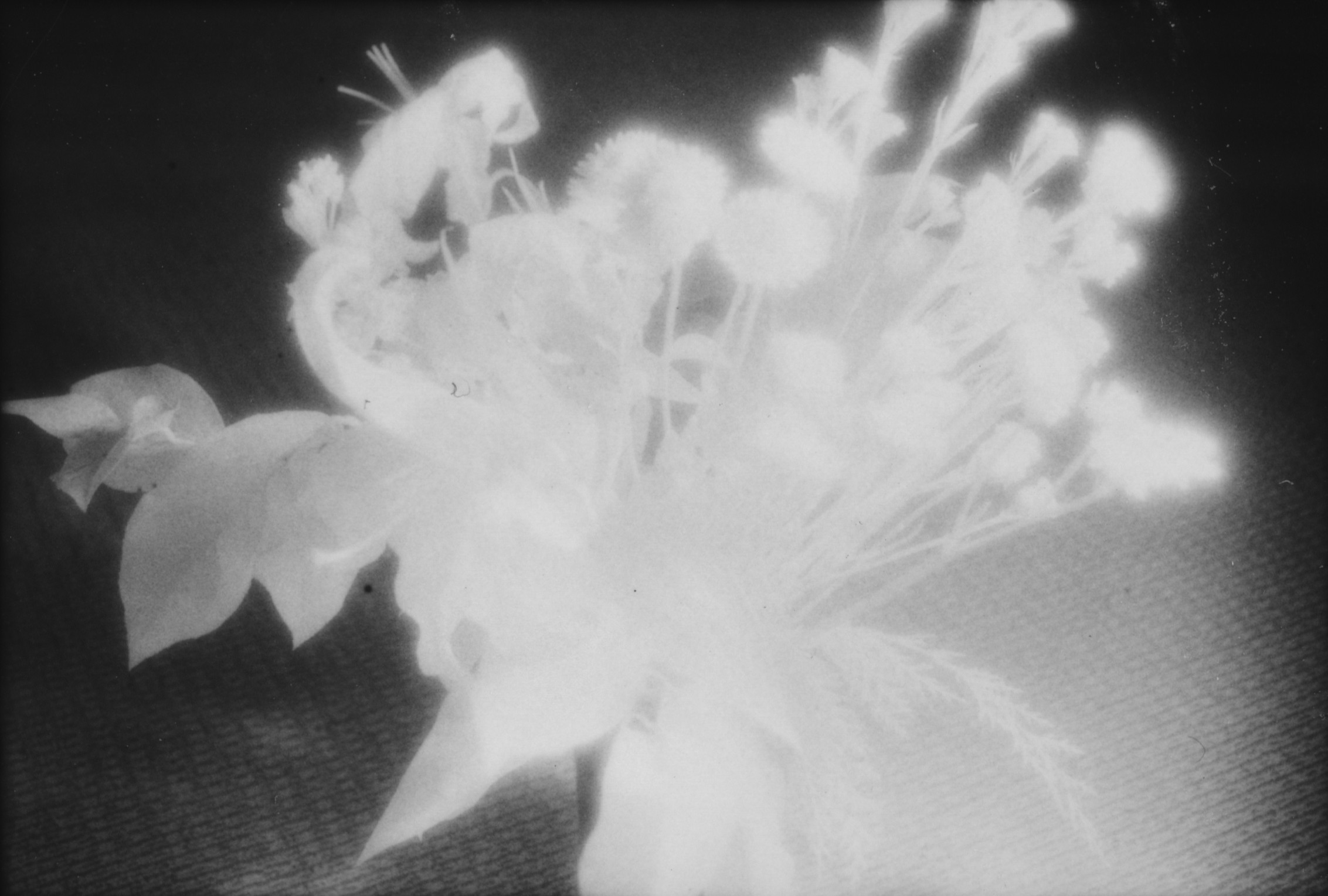
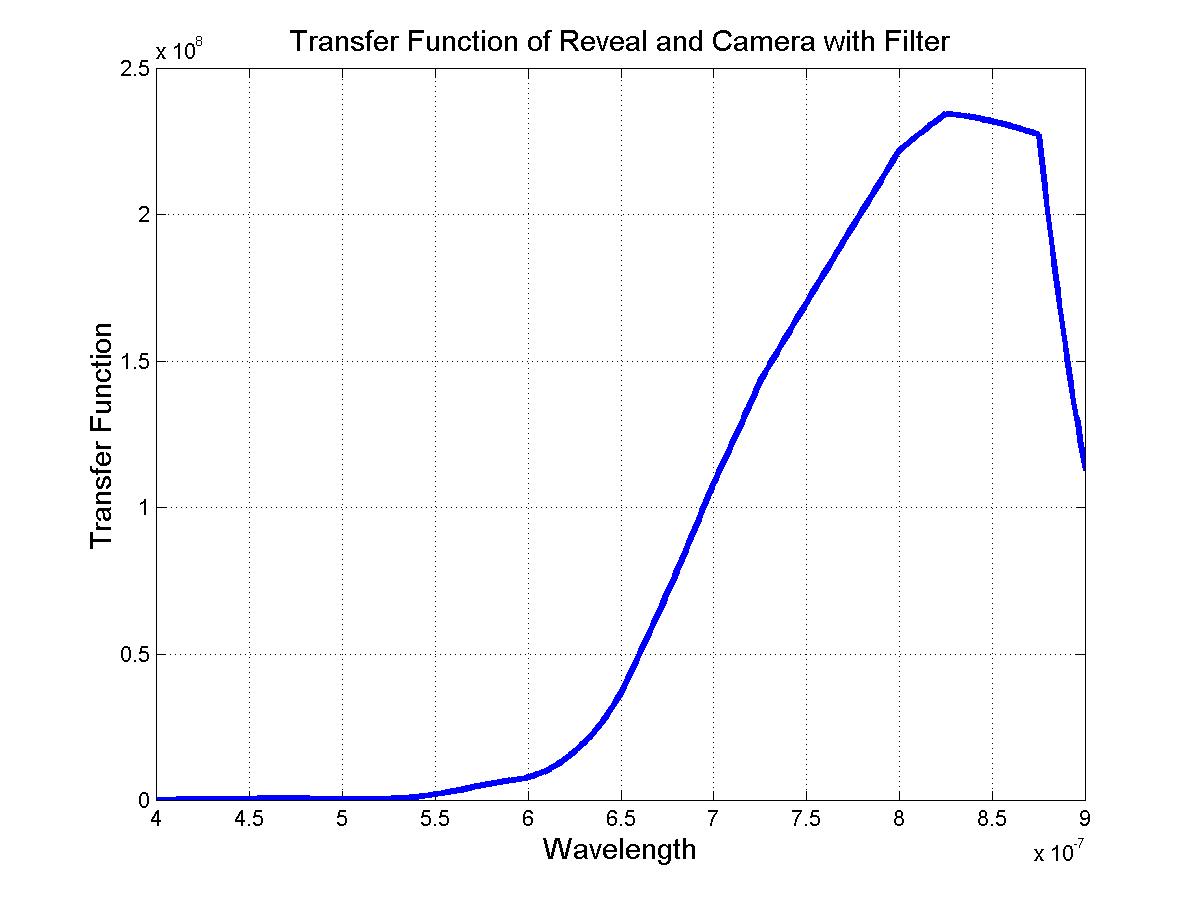
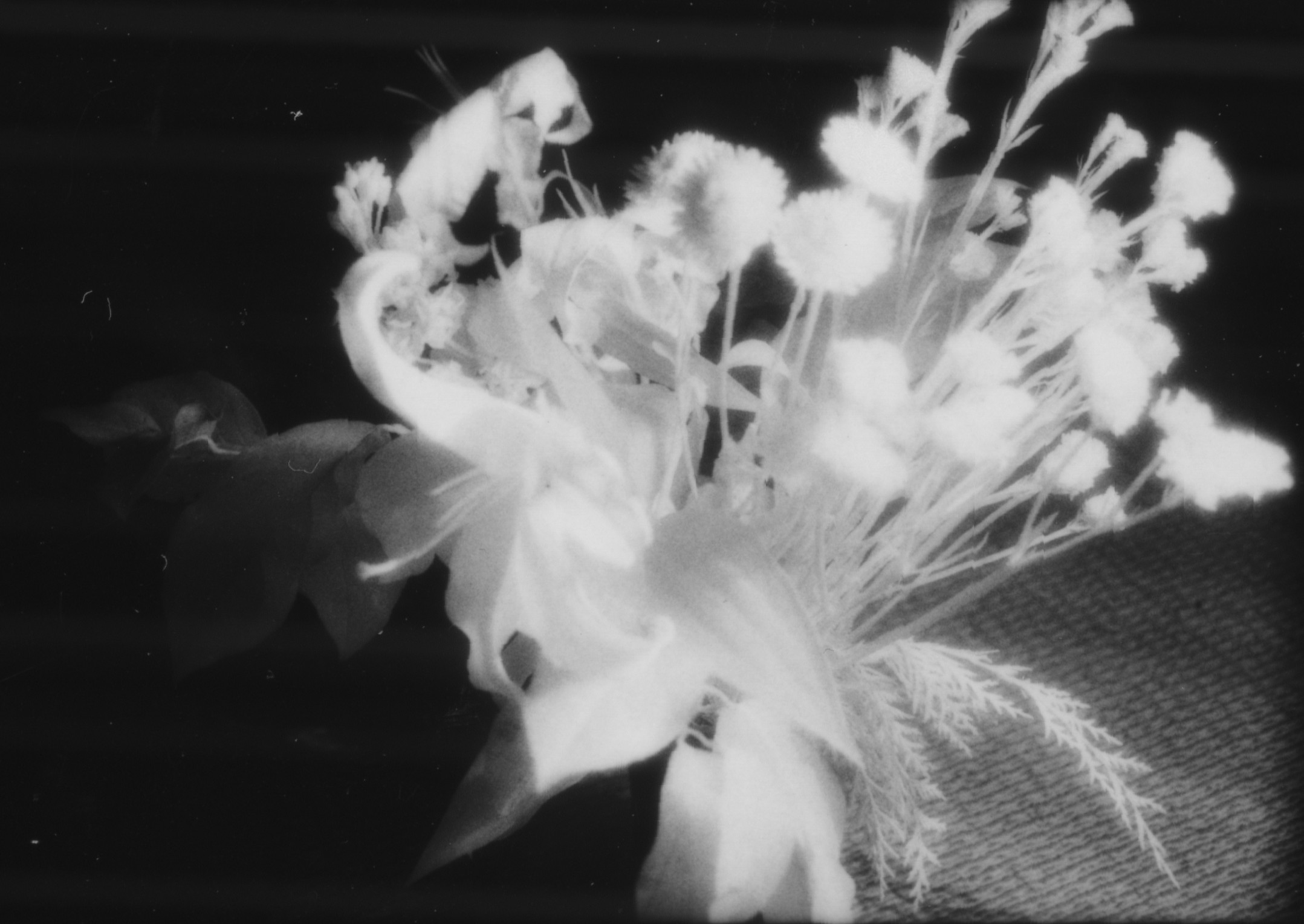
Adding the filter produces the right image, under the same illumination conditions. The corresponding transfer function is shown below. First, notice that the green leaves come out much brighter in this image, especially to the left. The system is not anymore sensitive to green light at 500nm with the red filter than it was before. Instead, the leaves reflect near infrared light, at a wavelength between 700 and 900nm. With the filter, the infrared component dominates the exposure, and the leaves therefore come out brightly. Notice also that the flowers in general come out very brightly, meaning that they also reflect infrared light significantly. The purple flowers are no longer much brighter than the other flowers, as the violet component (400-450nm) of the light has been taken out by the filter. The yellow flowers are not significantly brighter than the other flowers, although they do stand out some in the color image. This is because of the notch at 570nm in the transfer function corresponding to the glass of the reveal bulb.
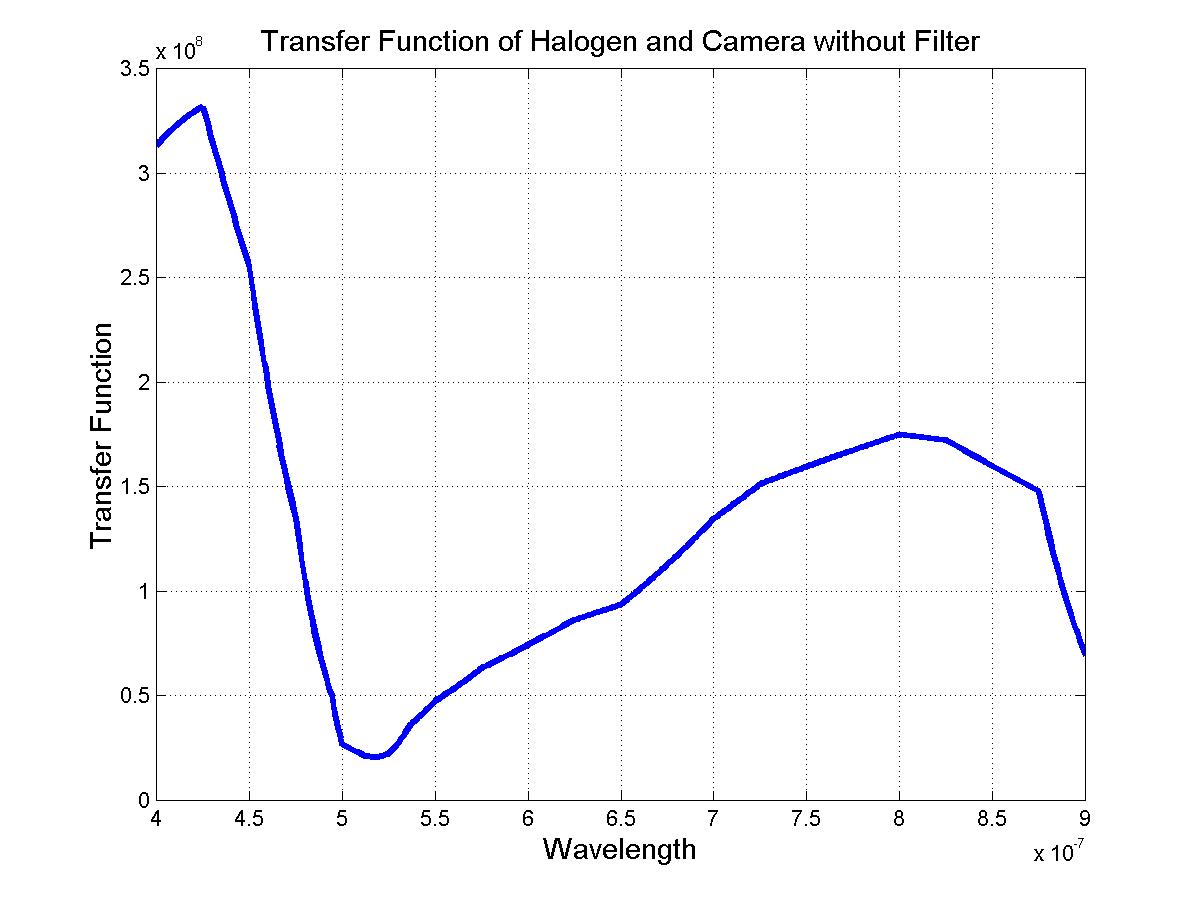
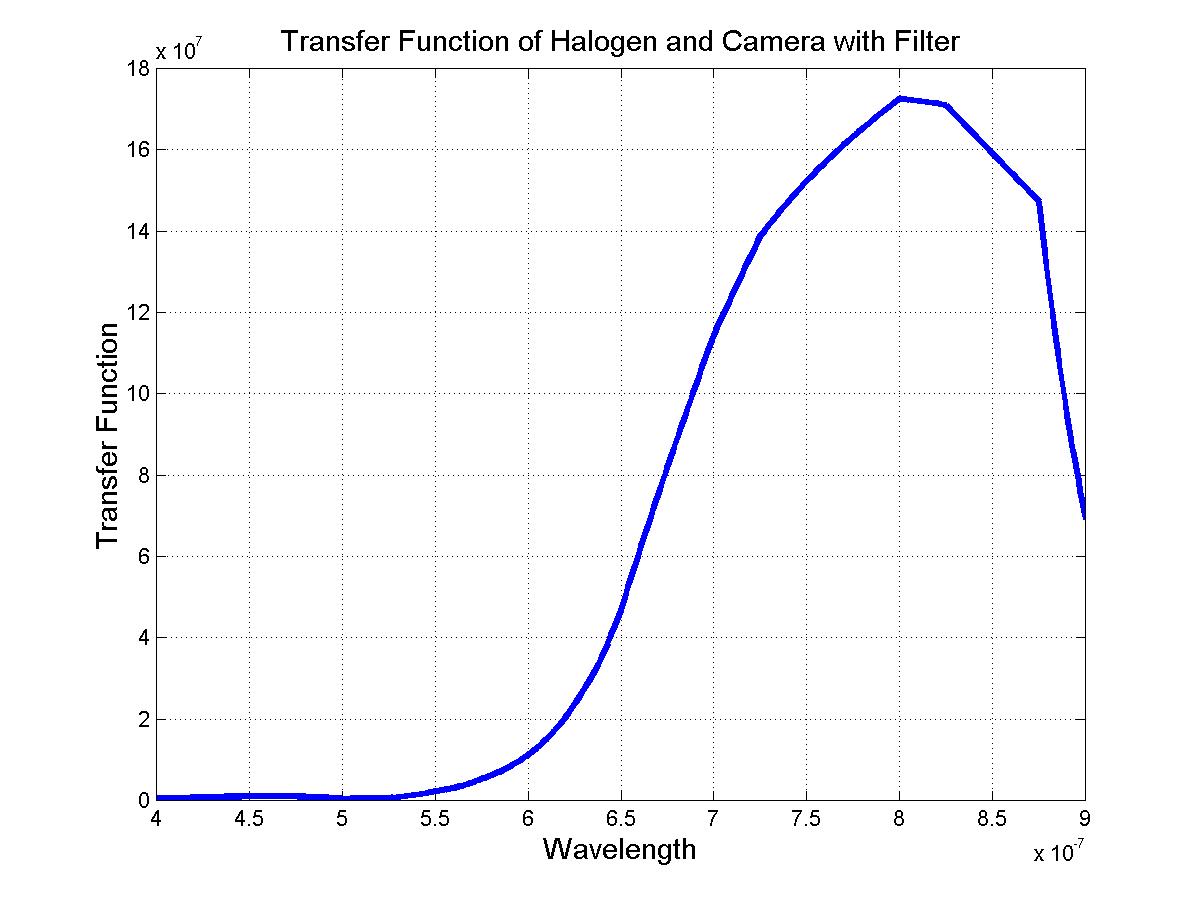
The image at left is taken with a Halogen 60 light bulb source, without a filter on the camera. The transfer function of the system is shown below. The image corresponds very well with the transfer function. The purple flowers on the right come out very strongly, as expected. The system has a strong response to violet light with wavelengths between 400 and 450nm. The white and red flowers to the left also come out brightly. Finally, the green leaves do not come out brightly in the picture. In fact, the leaves to the left are not even visible. This corresponds to the low value of the transfer function in the wavelengths near 500nm, or green visible light. Compared to the other colors, the green leaves do not come out brightly.
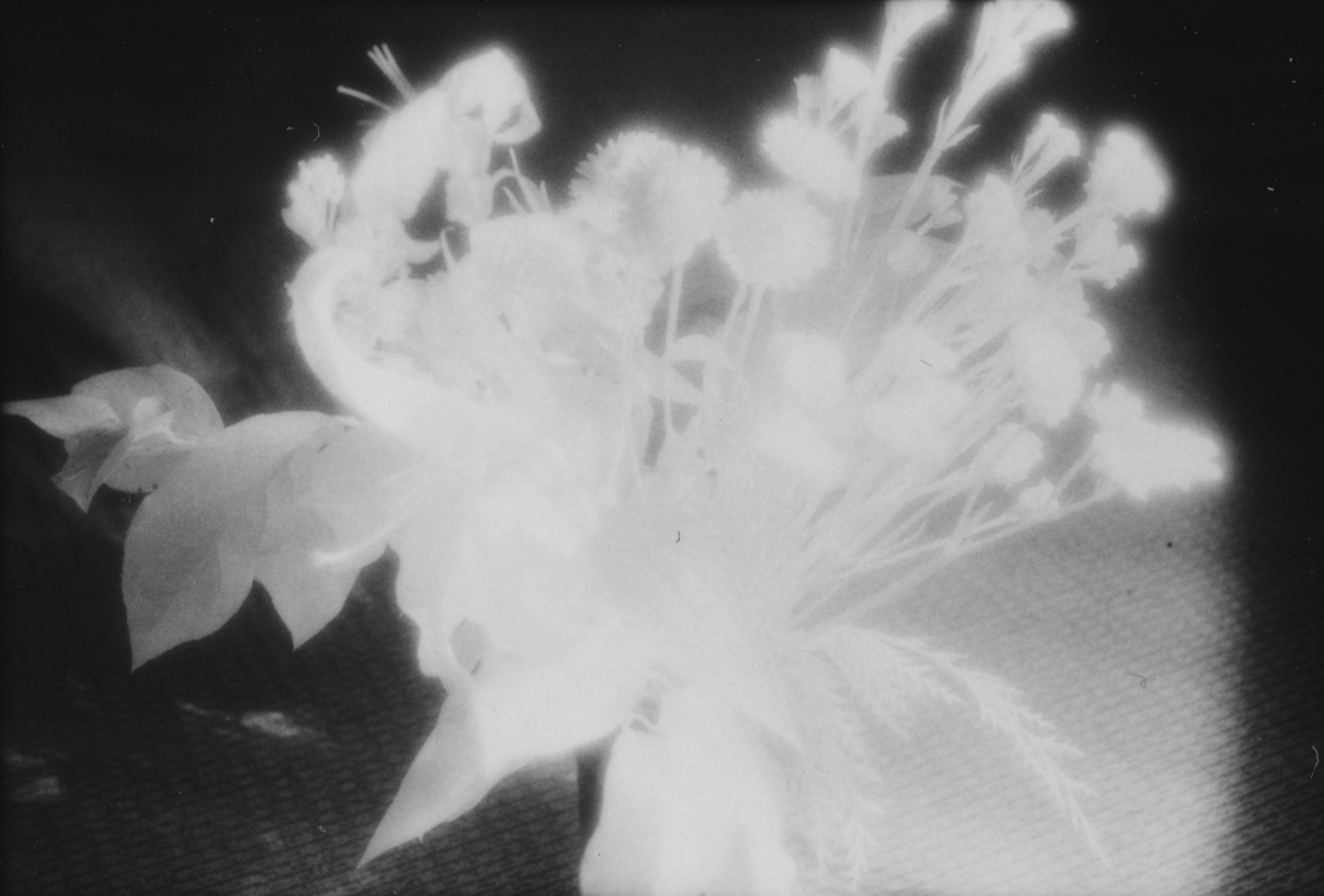
Adding the filter produces the image at right, under the same illumination conditions. The corresponding transfer function is shown below. First, notice that the brightest flowers are the red and white ones in the left-center of the image. In fact, a bright strip can be seen across one of the petals. This corresponds to the red light being reflected by the flower, meaning it has a strong component in the wavelengths near 650nm. Looking at the transfer function, it can be seen that the system still has a strong response to red light, which is why this comes out the brightest. The green leaves to the left are now visible, even though the exposure is not sensitive to light with wavelengths near 500nm. This means that they reflect near infrared light strongly. They are not as bright as the red and white flowers though. This means that the flowers are also reflecting near infrared light. The leaves are now visible because the visible light of the yellow and purple flowers have been filtered out, leaving just their near infrared components and reducing the total light coming into the camera. All parts of the plant appear to be strong reflectors of near infrared light.
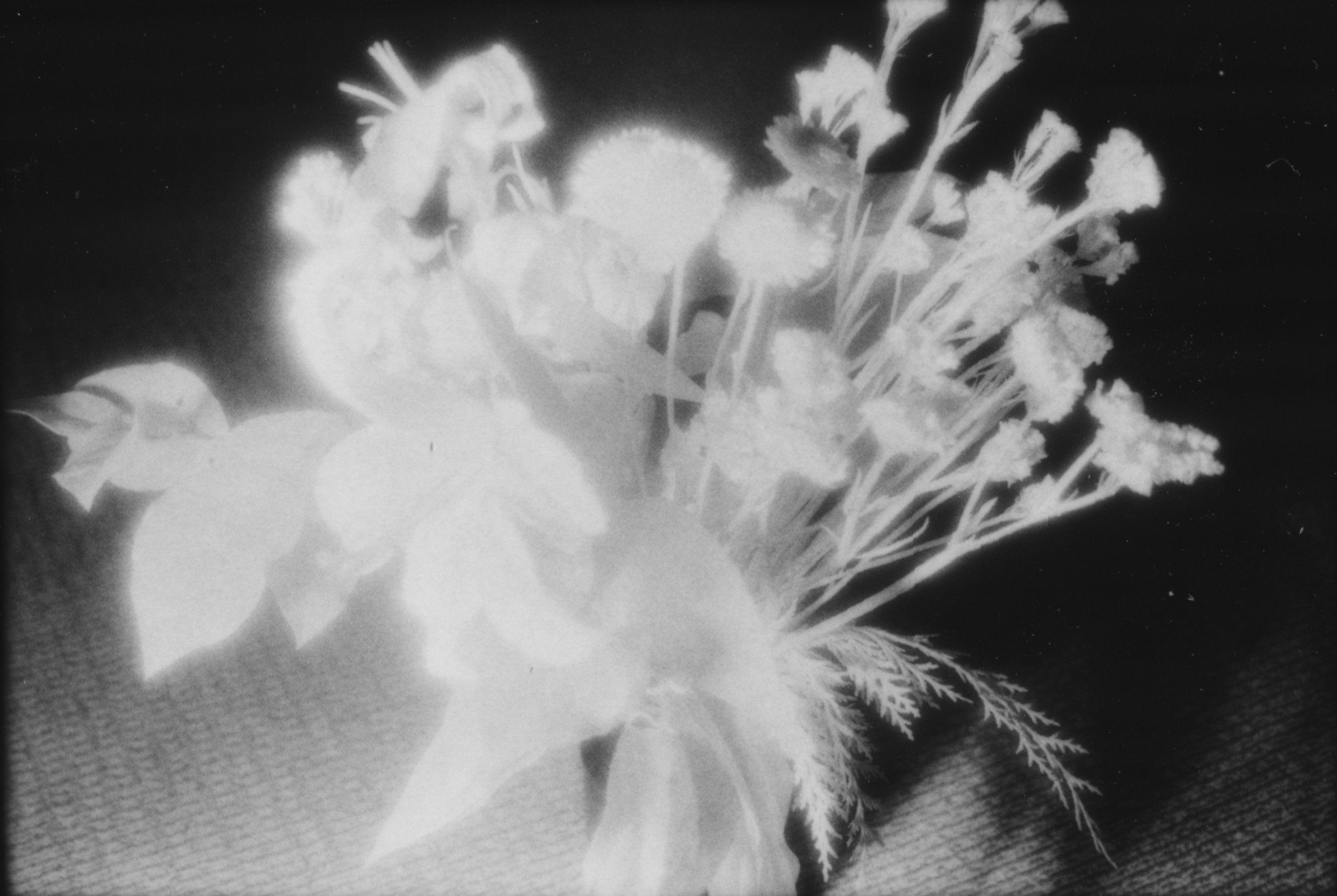
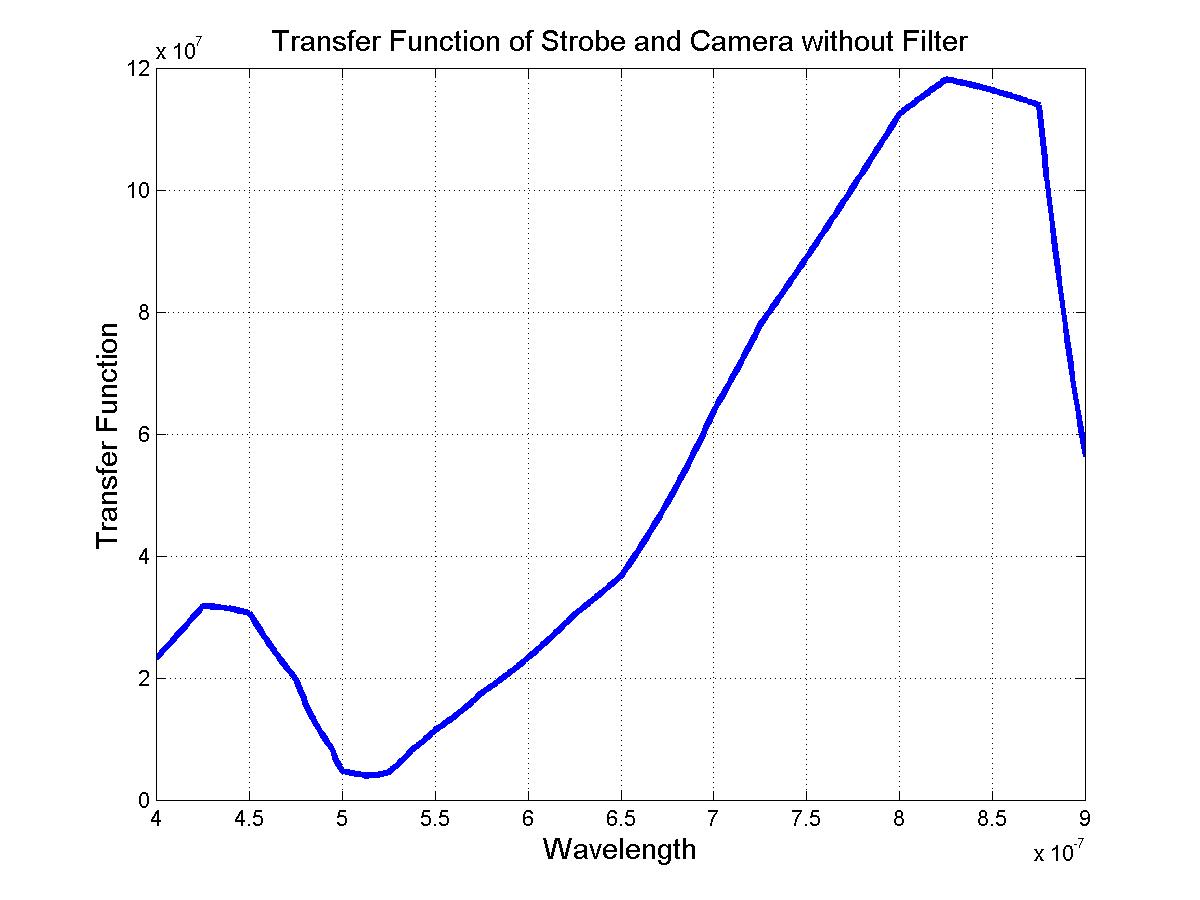
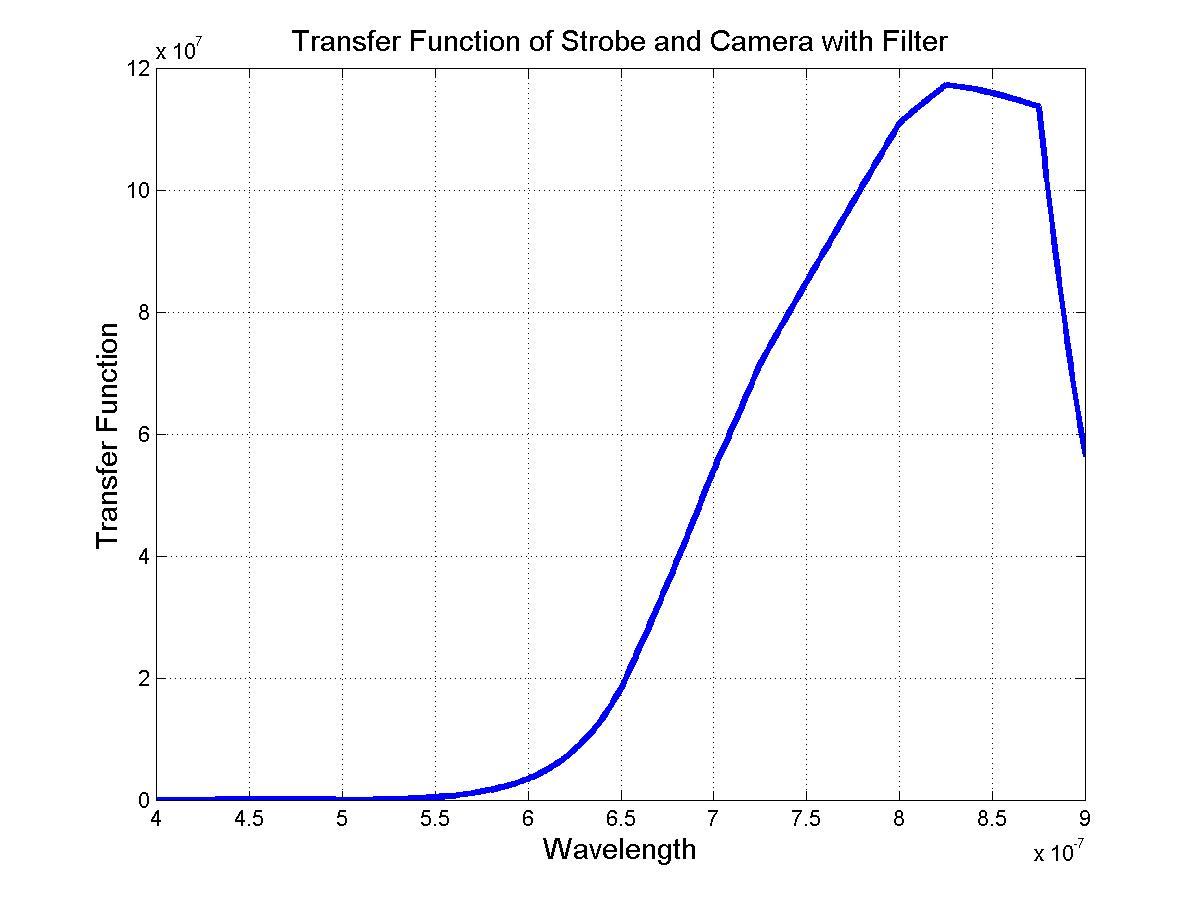
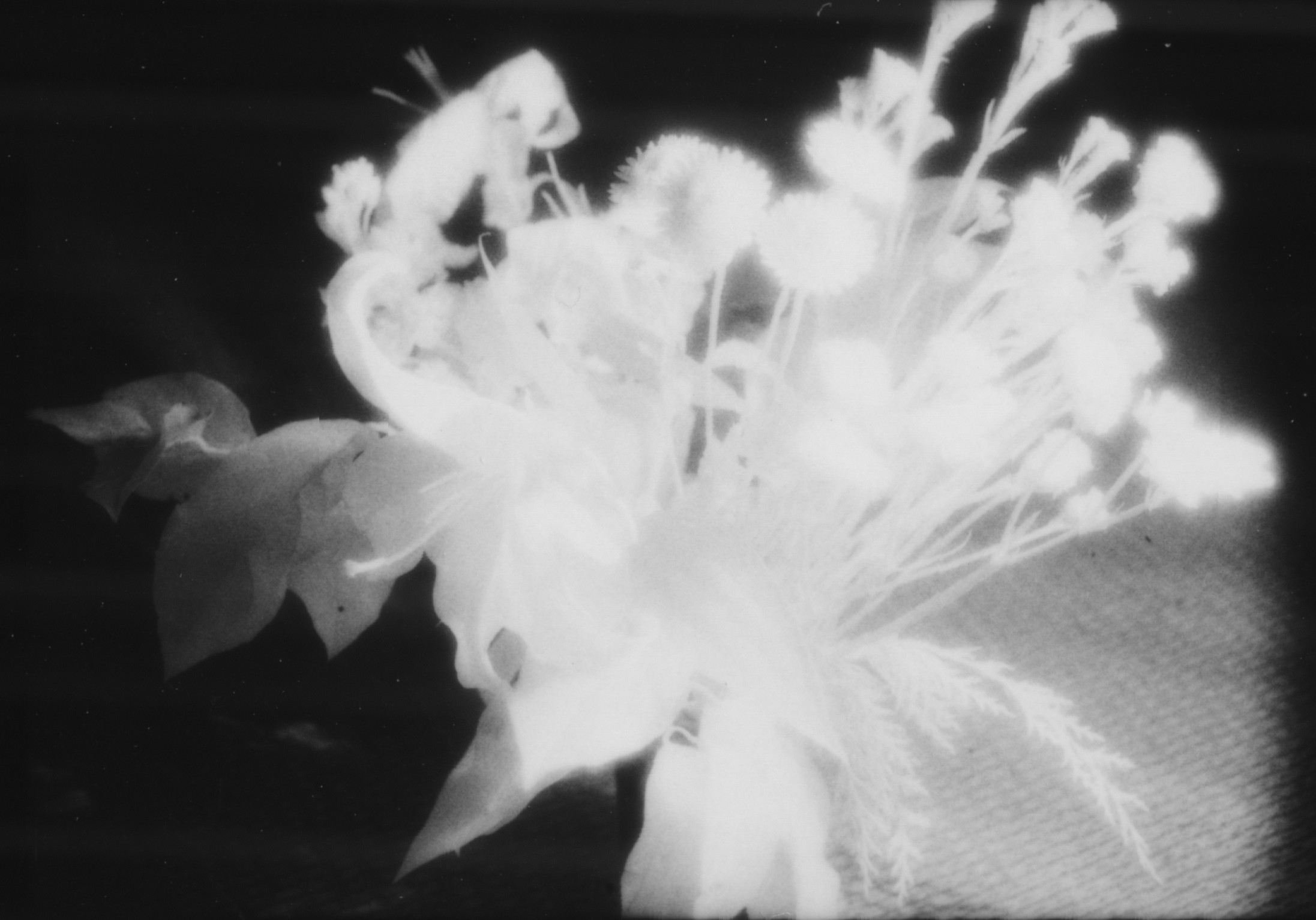
The image at left is with a strobe incandescent light source, without a filter on the camera. The transfer function of the system is shown below. The image shows that the flowers come out very bright. The transfer function shows that most of the exposure is due to wavelengths from 650 to 900nm. This brings out the infrared aspect of the image, so we can see all of the flowers and the leaves. Note that the red and white flowers to the left come out the brightest, as they reflect a significant amount of red (650-760nm) and near infrared (760-900nm) light. The other colored flowers are not as bright as their visible light components are attenuated.
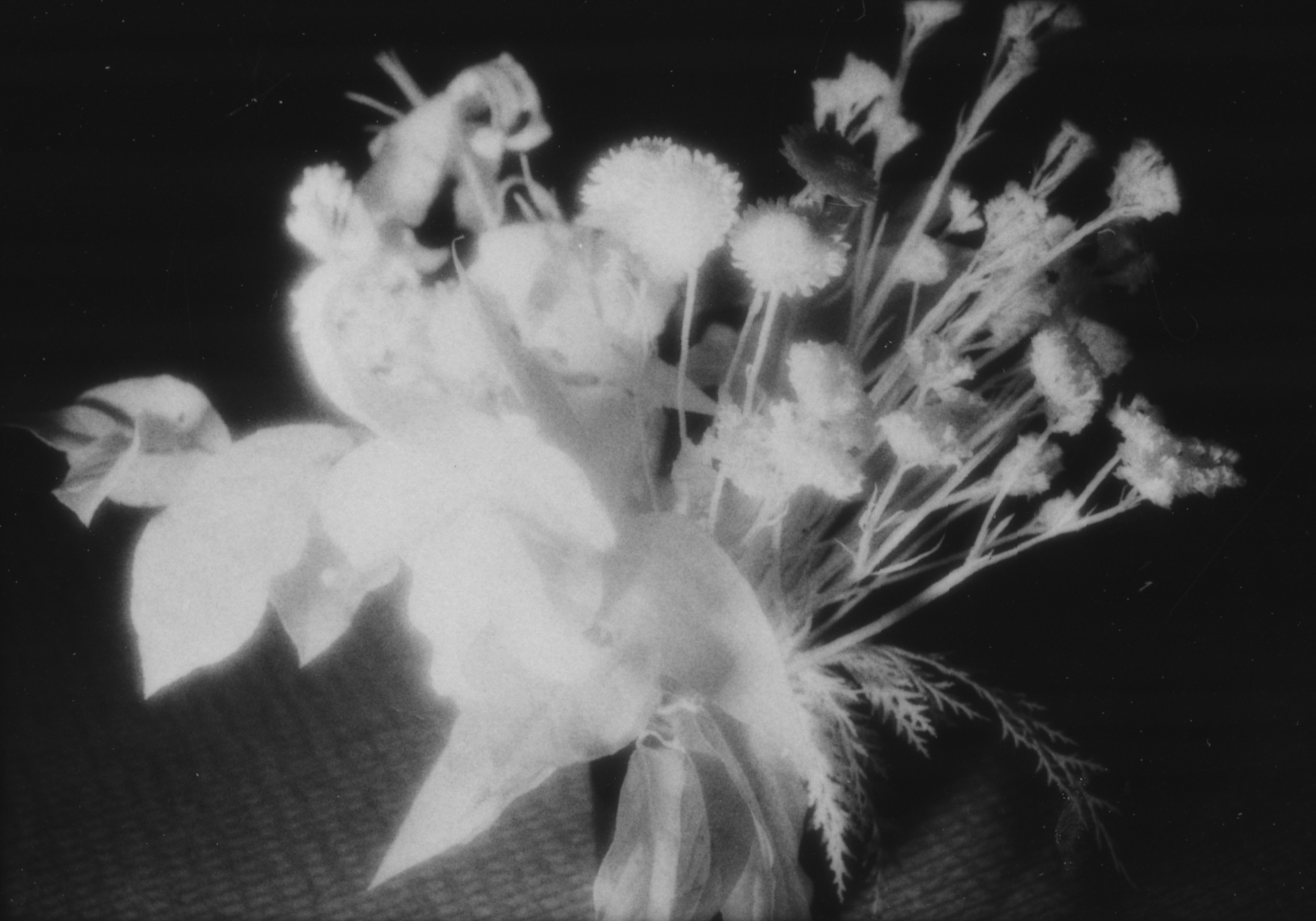
Adding the filter produces the image at right, under the same illumination conditions. The corresponding transfer function is shown below. The system is not very sensitive to the visible part of the spectra, and so the near infrared image comes out very clearly. Notice that the green leaves are very visible, as they reflect in the near infrared well. The visible light reflected from the flowers no longer drowns out this near infrared component, so the leaves are more visible. The red and white flowers are still the brightest, as they have a large reflectance from 650 to 900nm. Finally, notice that the purple flowers are darker, as the visible light they reflect (from 400 to 470nm) has now been filtered out.
Above is shown the same shot of flowers, under three different lighting conditions: Reveal, Halogen and strobe lights. The corresponding transfer functions are shown below. The camera has a filter for all three images. The strobe image is the darkest, as the 50% duty cycle results in it having the least illumination. The Reveal image is the most exposed, as that bulb has the strongest illumination.
Further comparisons can be made in the relative brightness of certain parts of the plant. Notice that the leaves are brightest when compared to the flowers for the strobe light, and darkest for the Halogen bulb. Careful comparison of the transfer functions show that the Halogen curve will be more sensitive to reflectance between 600 and 800nm. The curve with the strobe light is narrower, meaning that the system will be less sensitive to visible light. This brings out the leaves, as they reflect infrared light well. So even though their visible component is around 500nm and is filtered out, their near infrared component is relatively strong with the strobe light illumination. Similarly, the purple flowers are the dimmest on the strobe image. The transfer function has diminished the most for the strobe light below 470nm, and so there is very little exposure from the reflected purple light, only the near infrared they are reflecting is contributing. Although difficult to tell, it appears the yellow (570nm) flowers come out brighter relative to the other flowers with the strobe illumination than they did under illumination by the reveal bulb, corresponding to the lack of a notch at these wavelengths with the different glasses of the bulb used.
Home Introduction Applications Methodology Modeling Results Conclusion References Appendix I Appendix II