PSYCH221: A survey of digital watermarking techniques
|
Introduction: Methods: Conclusion: Contacts: |
Methods
Least Significant Bit (LSB) Insertion
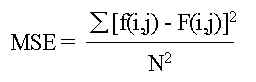
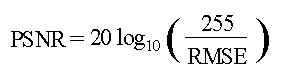
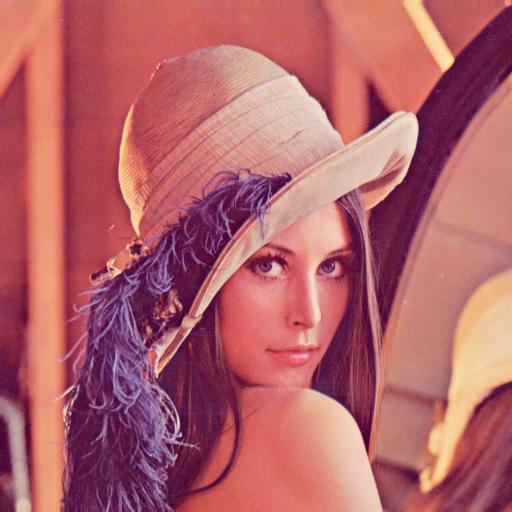
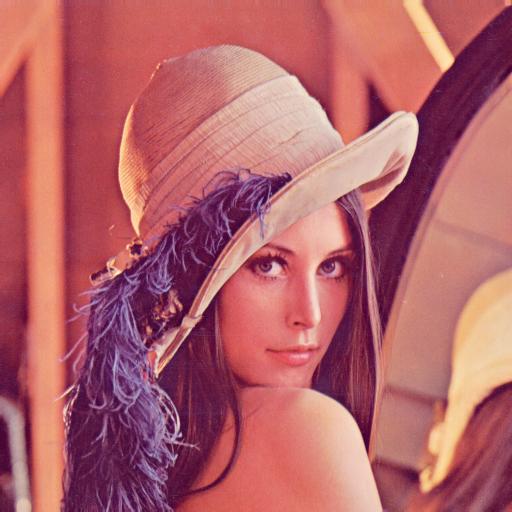
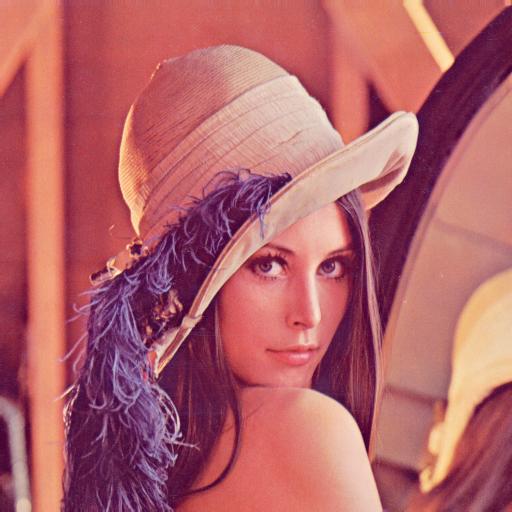
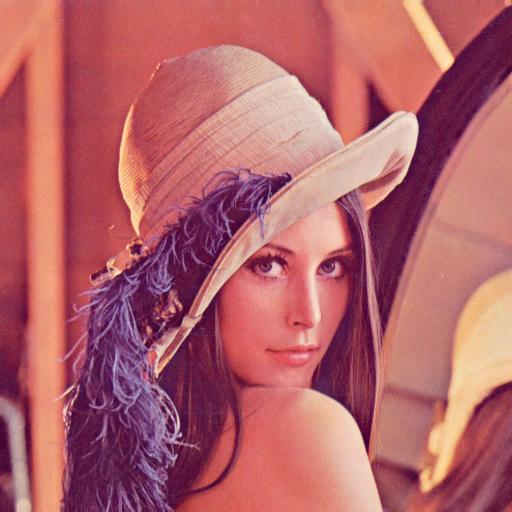
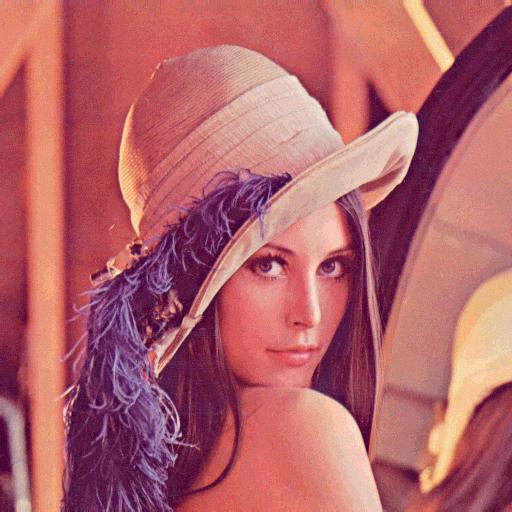
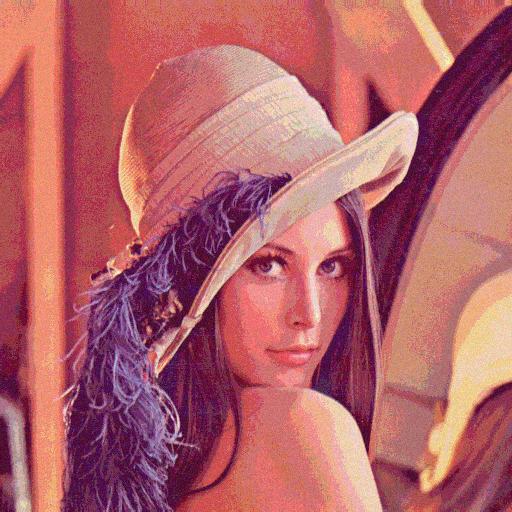
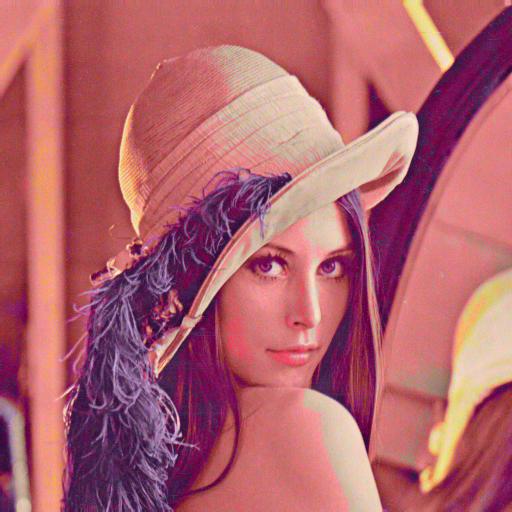
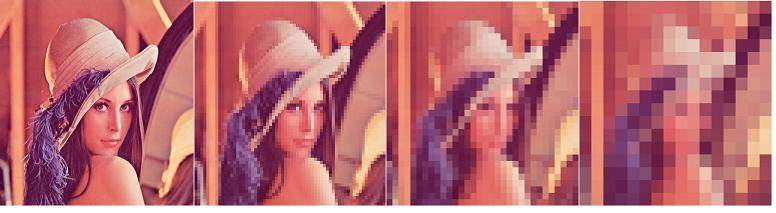
LSB is the simplest, earliest watermarking algorithm. For each pixel, the least significant bit is overwritten with one bit of the watermark message. For example: "the letter A can be hidden in three pixels (assuming no compression). The original raster data for 3 pixels (9 bytes) may be (00100111 11101001 11001000)The binary value for A is 10000011. Inserting the binary value for A in the three pixels would result in (00100111 11101000 11001000)This takes advantage of the human visual system's inability to pick out very similar colors. Because of the large number of available colors in an uncompressed image, a substitution of adjacent colors will be undetectable. The images below show the result of LSB insertion on various numbers of lower order bits. The same number of bits were modified for each RGB channel. For the watermark, a string of random bits were used. While the embedded message can take any form, one with a high degree of structure may create artifacts in the final image. For this reason messages should be encoded into an apparently-random string of bits (such as through MIME encoding). Two measurements were taken, embedded capacity and PSNR. embedded capacity = (# embedded bits) / (image size)where RMSE = sqrt(MSE).
LSB insertion works surprisingly well; the first hint of image degradation doesn't seem to occur until 4-bit distortion, corresponding to a 3.1 MByte watermark for this particular image! This method seems to fail first in regions of flat color, with regions of high spatial frequencies being less affected by the distortion. Despite excellent capacity and ease of implementation, LSB insertion suffers from several problems. First, it treats all parts of the image equally. Localizing the watermark in high-frequency regions would produce a more visually pleasing result. Second, LSB insertion is the least robust of all methods. It does not survive any sort of image manipulation, in particular JPEG compression. This is an example of a "fragile watermark". As an experiment, I tried LSB insertion in the YCbCr color space instead of RGB, weighting the Cb and Cr channels more heavily than the Y. The YCbCr version is granier than the RGB and exhibits color artifacts throughout the image. Color "banding" seems more apparent, particularly in the shoulder region.
|