|
PSYCH 221 FINAL PROJECTMISSION |
|
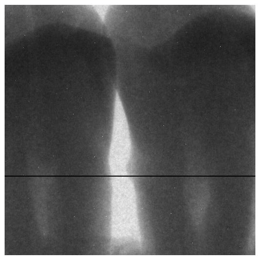
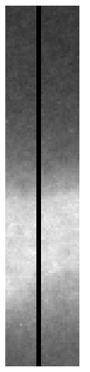
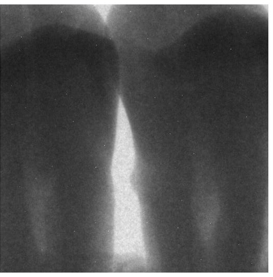
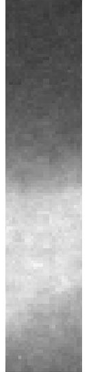
Overall Picture: The central two rows of the device are used for “reading-out” the captured imaging data, hence these rows cannot be used for imaging. Therefore, on any captured image, the central rows, i.e. rows 672 and 673, will be missing. This problem provides the basis for our project, and we will try to fill in these missing pixels by running correction algorithms..
Fairchild has been copying the neighbour rows to fill in the missing rows to overcome this problem. In our project, we studied methods and set ourselves a summary of the goals we will try to meet in our project. These goals are determined based on project specifications from Fairchild Imaging and the capabilities of the imaging device: Minimize visual artifacts Our main goal is to minimize the imaging artifacts that result from the missing central rows. Since the image has very high resolution, the artifacts become almost invisible even after the missing rows are filled in with the neighboring rows. Although zooming into the filled in rows can make the artifacts visible again, judging just by viewing is not an objective measure. Hence, we will have to come up with a metric that quantifies how successful our algorithms are in reducing artifacts. Limit on maximum computation time The device will be used by dentists for capturing patient’s dental images. Although some computational delay is acceptable before the final image is produced, Fairchild Imaging group specified that the computation time for interpolation should not exceed 2-3 seconds. Computational power limitation Since our algorithm will be run on a standard computer, not an embedded device, there are no explicit limitations on the computational power or energy consumption. For the purposes of this project, these resources could be taken to be infinite.
|
||||||||||||||||