 Index | Introduction | Methods | Results | Conclusions | References and Acknowledgements | Appendix |
||||
|
Results
15 subjects in total were tested. 1 was self-identified as color deficient, while the other 14 were self-identified as color normal.
The raw data collected, as well as a detailed breakdown of the results, is tabulated in Appendix I.
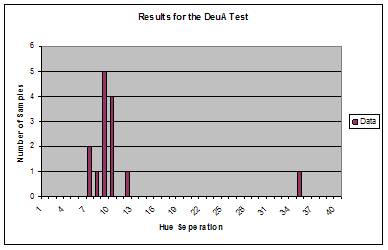
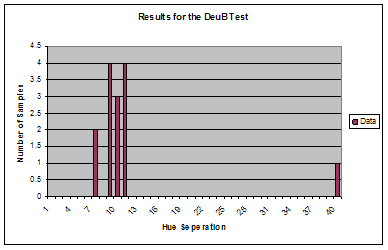
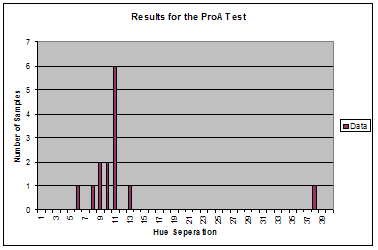
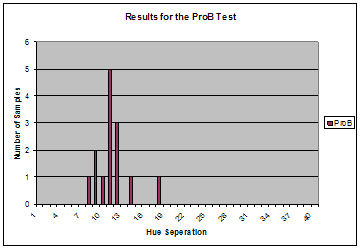
The histograms of scores for each of the sub-tests are as follows:
Lower scores represent better color vision capabilities, the DeuA and DeuB trials test the medium wavelength color receptor, and the ProA and ProB trials test the long wavelength color receptor.
There was significant variation in all of the tests, but the protanope tests seem to have greater variation than the deuteranope tests. The rightmost outlier in all of the tests is the self-identified color deficient individual, the researcher.
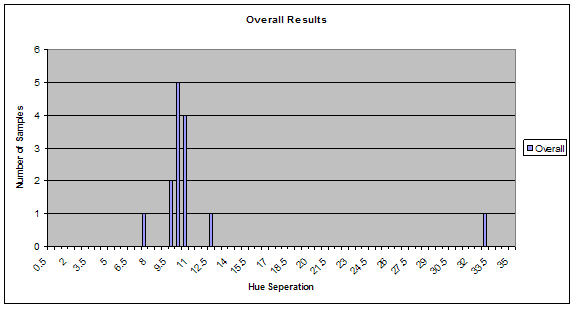
Overall results
The overall results were taken by averaging an individual's subscores.
As can be seen from the various histograms, there are significant variation in the color vision abilities of the population, even excluding the color deficient individual. In the overall results, the results are most clear: the color vision abilities of individuals follow a normal distribution, with the majority of people someone around the mean, and a few outliers on either sides of the vision ability spectrum.
|