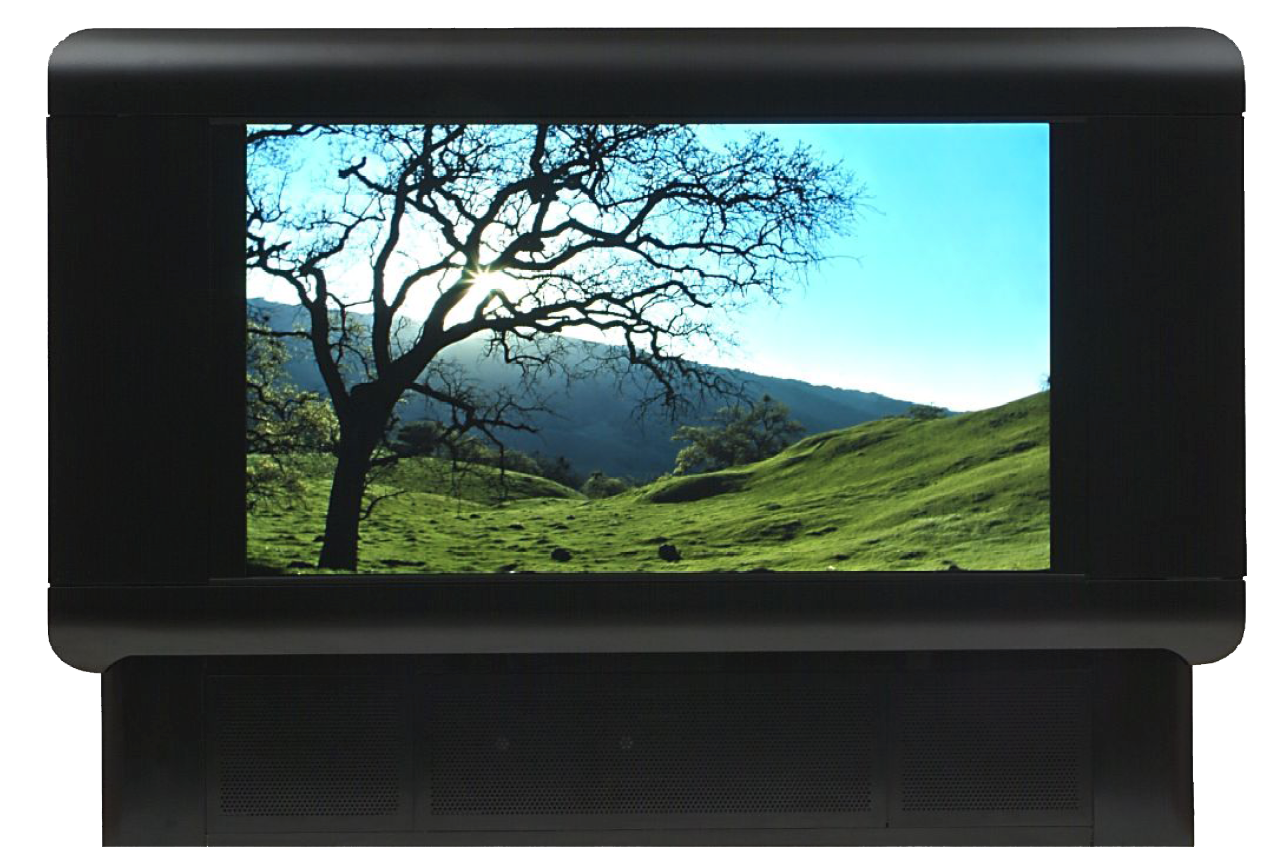
High dynamic range (HDR) display technology is becoming available in the marketplace, and there are many interesting applications that such displays can be used for. Human visual system studies, for example, can leverage the increased brightness and contrast to better simulate real-world scenes for research purposes, and on the other end of the spectrum, many movie post-production studios want to be able to simulate movie-theater-level brightnesses for their work. This project uses the engineering sample HDR display from BrightSide Technology.
The Brightside HDR display uses a dual-modulator approach: It has a large array of LED illuminators covered by a standard LCD array. Each LED can be individually controlled, and the final image is a product of the backlight LED light pattern and the LCD front panel modulation. The LED array has far fewer LEDs (759 in the prototype) than there are pixels in the LCD (1280x1024). This means that the LED array produces an image with a large dynamic range, but low resolution, and the LCD panel can modulate that image with a high-frequency, low dynamic range image.
A central concern with using the BrightSide display, then, is in splitting an input HDR image into these two components: The LED image, and the LCD image. In this project, the encoding script provided by BrighSide was first converted to a Matlab script, and then enhanced with a convex optimizer to improve image accuracy.
In addition, a Matlab-based simulation script was written, which accepts as input an image generated by an encoding script, and outputs the luminance image which represents the output from the HDR display. This allows for quantitative measurement of the error resulting from the encoding process.