
APPLICATIONS
Over time, paintings can degrade in any number of ways. Paintings that were hung in churches often have candle smoke damage, causing them to look as though they were painted using only brown and black. Many pigments can also change over time – becoming more yellow or brown. The act of simply moving a painting from one location to another can cause cracquelure, or tiny cracks in the paint. Other paintings can have more extensive damage. Many paintings have come to museums with extensive water damage, mold, or holes and tears in the fabric. Paintings, though in good condition, may have been altered, either by the original artist, or by past restorations attempts.
Physical restoration is often done to the paintings. If the painting has been darkened by dirt, mold, or candle smoke, a chemical cleaning can be done. Cleaning agents are used on small parts of the painting until an adequate one is found, and then the whole painting is cleaned. This is time-consuming, and often unsuccessful. For some works that have water damage or holes, they are repaired, and the missing part of the painting is filled in by an artist. This is also a time-consuming process, and involves making assumptions about the painting and the artists’ style. Both of these restoration attempts are protested by some people who believe that the aging of a painting is part of its artistic value.
Digital image analysis is a non-intrusive way to study paintings and how they have changed over time. The London Museum is currently working on a project that "ages" patches of Cobalt Blue, a pigment that is known to turn brown over time, to different lengths of time. They can compare the properties of the patch to a painting, and find portions of the painting where the original color was blue, not brown. Digital restoration can show the painting as it looked when it was created, and how it changed over time. London is having an exhibition in the Year 2000, with the theme of "time." The London Museum will be able to use the Cobalt Blue analysis to show the painting as it changed over time.
Changes in pigmentation can also be tracked through the future. A digital image of a painting can be taken at some yearly interval, and the yellowing of certain pigments can be tracked by the change in the *b value in CIELAB.
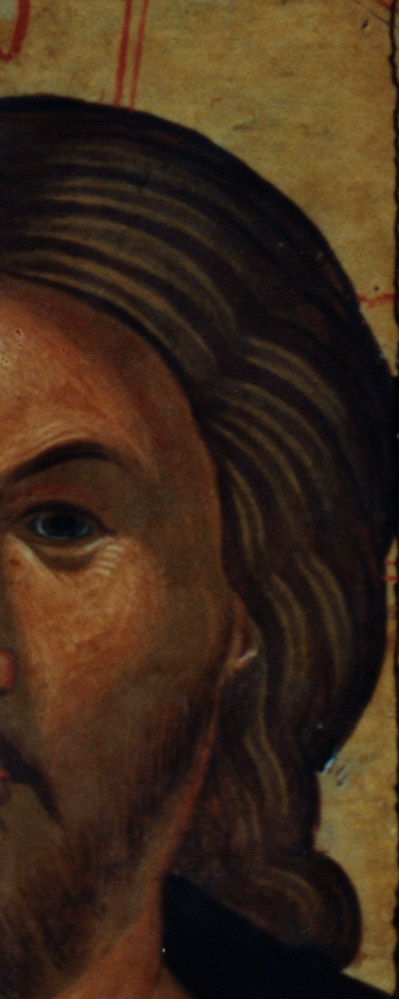
An attempt to digitally restore a painting (from the ANTHIVOLON project) is shown below. The first picture on the left is the painting as it entered the museum, with candle smoke damage. The picture on the right is a digital restoration. For comparison, below these two pictures is the painting after it has been physically restored with a chemical cleaning agent.