DSNU
1) Background
a. Definition: DSNU (Dark Signal Non-Uniformity) is a measure of the distribution of dark output voltages (dark current) for each pixel.
2) Methods
In measuring the DSNU, we took photographs with the cap covering the lens of the Nikon D70, so that no light would enter the camera. Switching the camera into the manual mode, we manually control the settings of the exposure time and the f-stop. We then photographed a series of 100 images with the Nikon D70 for each exposure time: 1, 2, 4, 8, 15, 20, 25, and 30 seconds. We then downloaded the image data into the computer in order to process using MATLAB code that we designed. Utilizing the steps provided in the handout by the EE 362 course instructors, our MATLAB code completed the following steps:
TEMPORAL AVERAGE:
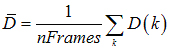
Let D(k) , k = 1, 2, K, nFrames, be the output values of a given pixel in the image for a sequence of captures performed with the Nikon D70. The temporal average is
VARIANCE:
Calculation of an estimate of the variance

3) Results
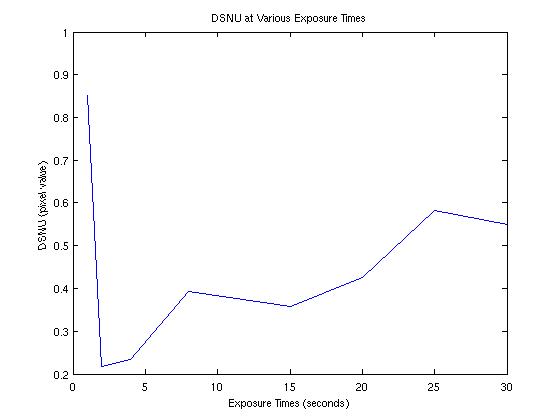
Figure 1. DSNU at Various Exposure Times.
After our analysis, we found that the DSNU values varied over time, which is an unexpected result. In step 2, we normalized the “DSNU image,” and thus, we would expect the DSNU value to be independent of time. We suspect that these deviant results are caused by imperfections in the camera or heating up of the camera as we took the hundreds of pictures.