|
|
|
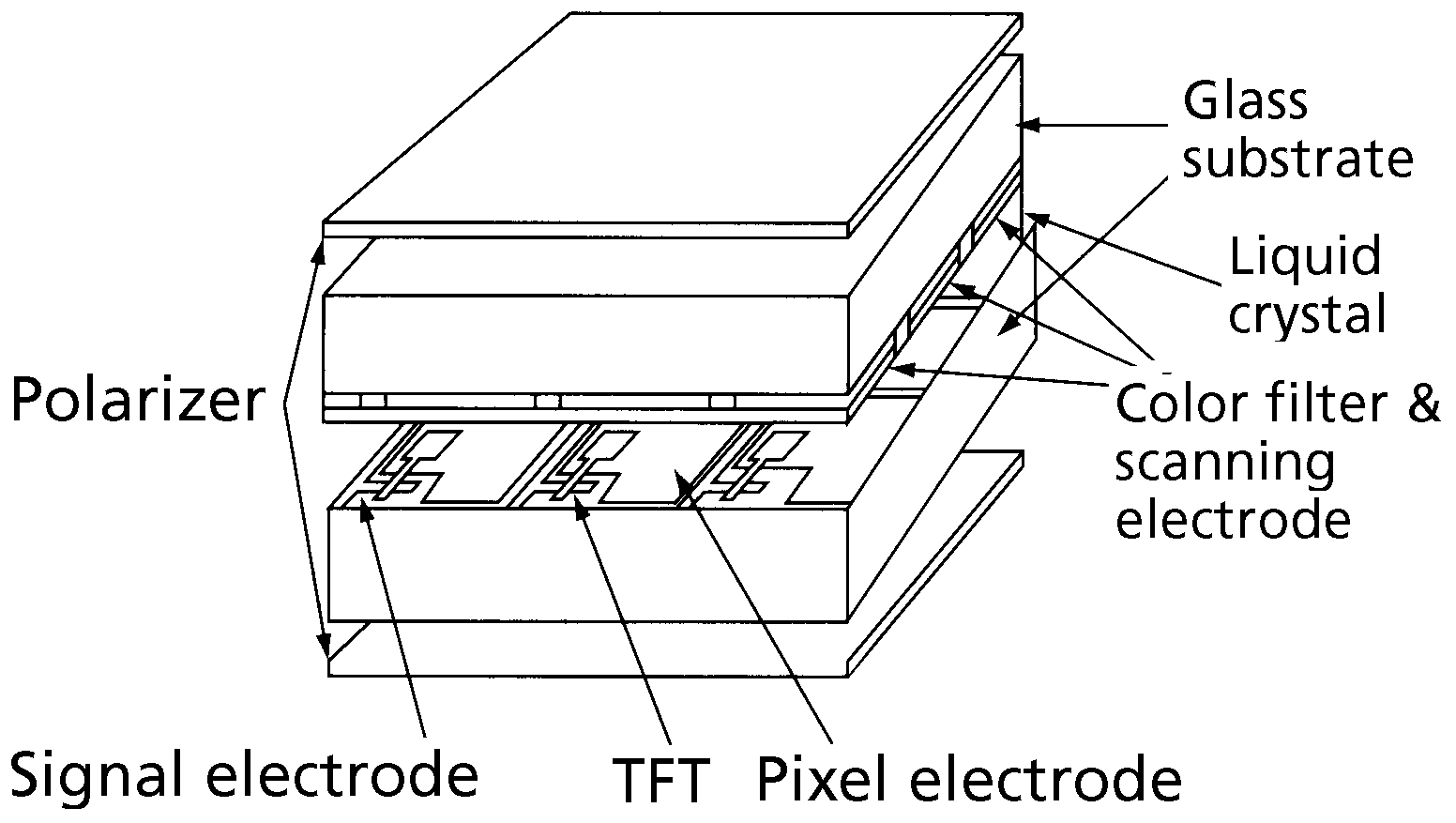
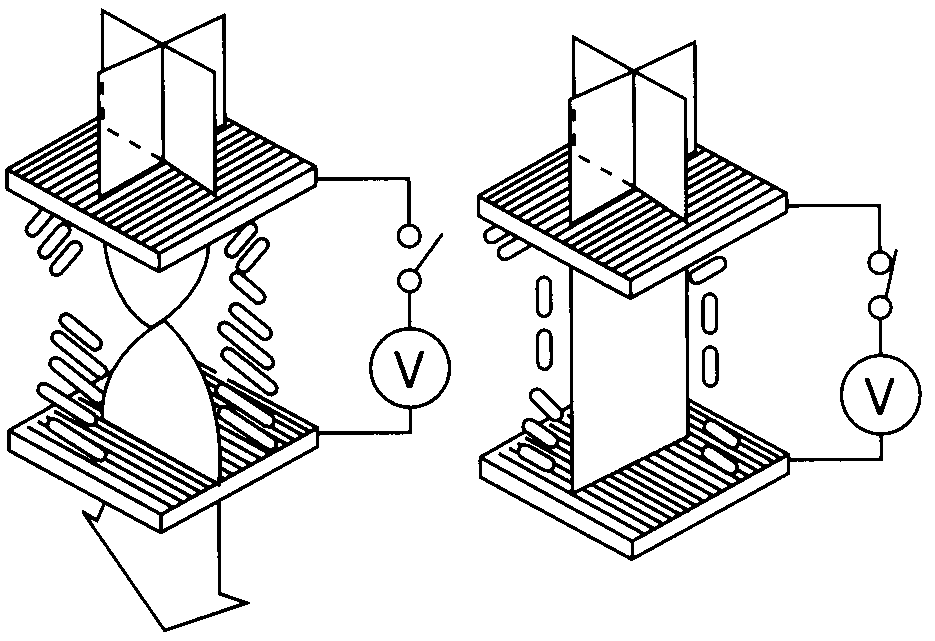
LCD diplays utilize the fact that certain organic molecules (liquid crystals, LC ) can be reoriented by an electric field. As these materials are optically active, their natural twisted structure can be used to turn the polarization of light by, for example, 90 degrees.
Two crossed polarizers normally do not transmit any light, but if a 90º-twisted LC is inserted in between, light will be transmitted as shown in the left of the figure below. On the other hand, applying an electric field will unwind the helical structure and the LC therfore loses its polarization-rotating characterisics. As a result, the display turns dark.
An LCD consists of an array of picture element ("pixels") which can be individually addressed according to this princple.
This type of LCDs are primarily used in inexpensive devices requiring low power consumption and a small form factor. Its drawback is its response speed, which is insufficiently fast for high resolution, high frame-rate displays.
This problem was solved in the late 1980's by the introduction of super twisted nematic LCs which are twisted 270º instead of 90º. They enabled semi-high speed, 8-10 inch, VGA resolution screens.
Try How stuff works for an interesting animation of this principle.
|