[Home]

Perfect Reflector Algorithm Results


Result Analysis 1 -- Input and Output R, G & B Values

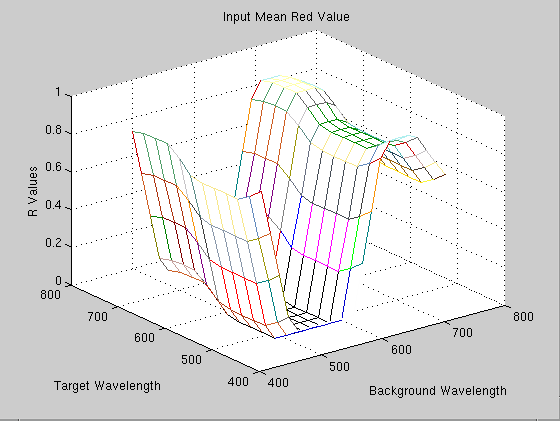
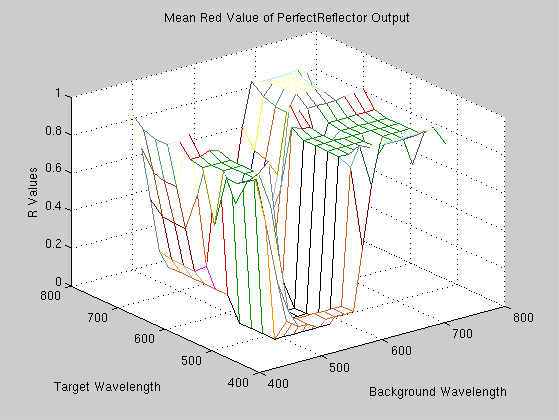
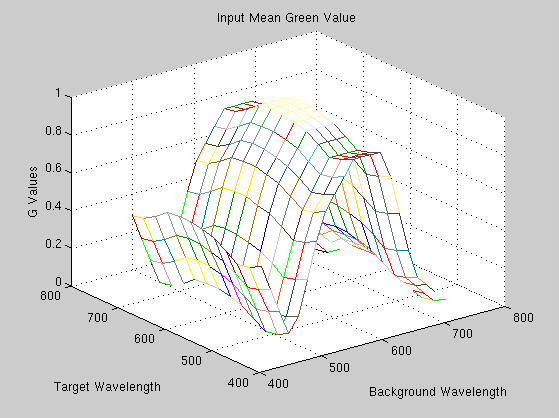
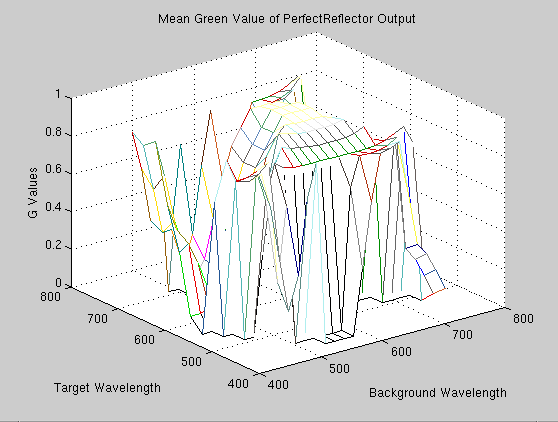
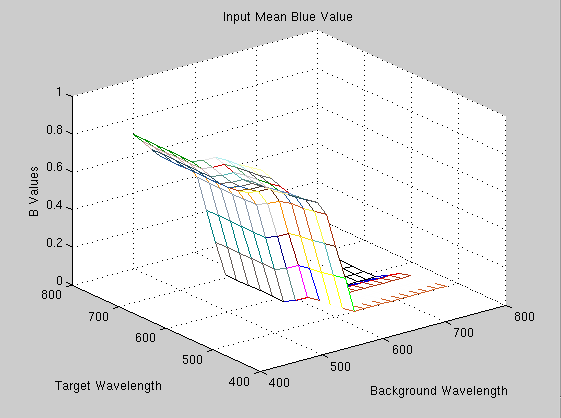
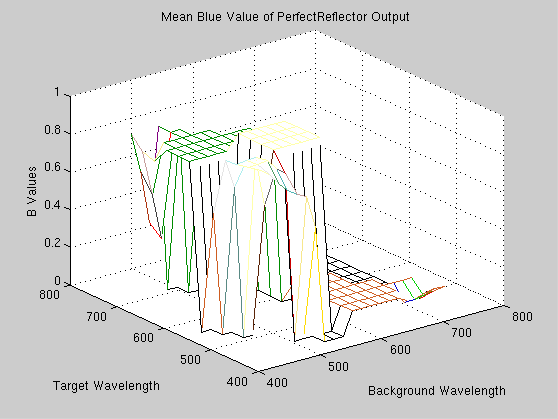
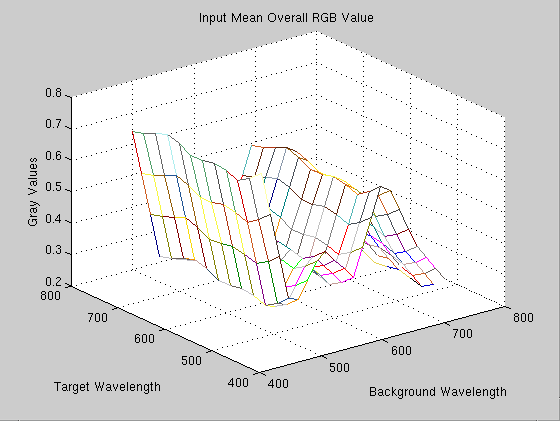
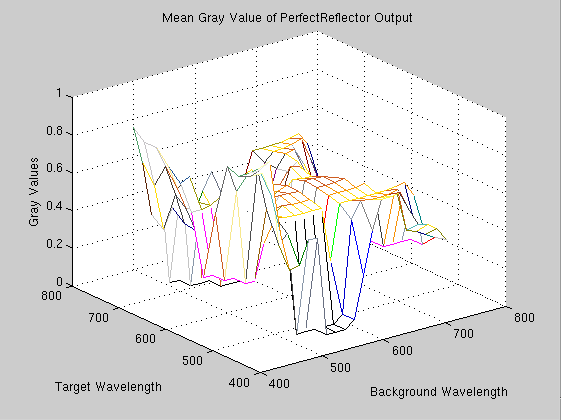
Similar to Gray World algorithm, we first look at the mean R, G, B and Gray values of input images and Perfect Reflector output images. We plot these values in three dimension figures with the background wavelength, target wavelength and R, G, B or Gray values. The plots of the input are done by InputPlot.m The plots of Perfect Reflector output are done by PerfectReflectorPlot.m The plots are shown as following.

From the plots, we can see the plots of Perfect Reflector algorithm vary a lot comparing to the input plots. It keeps the general shapes of the input plot for R values, but scales up and down a lot for G & B values. Because Perfect Reflector Algorithm uses the values of the brightest spot as scale factors, it scales the images quite differently depending on whether the brightest spot is in background area or in target area. Therefore the R, G & B values of output images change a lot comparing to the original images.

Input

Perfect Reflector Output


Result Analysis 2 -- Difference of Input and Output R, G & B Values

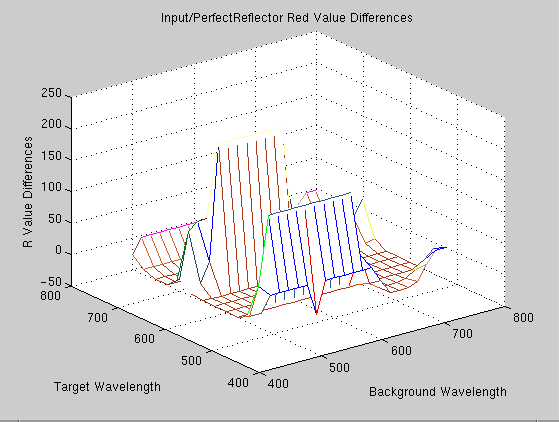
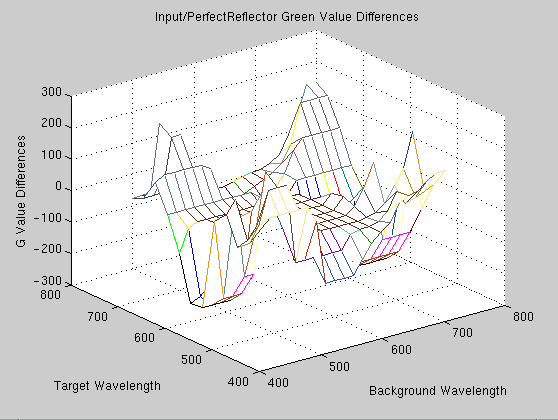
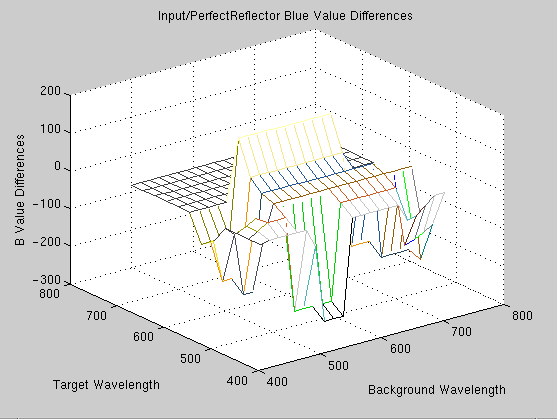
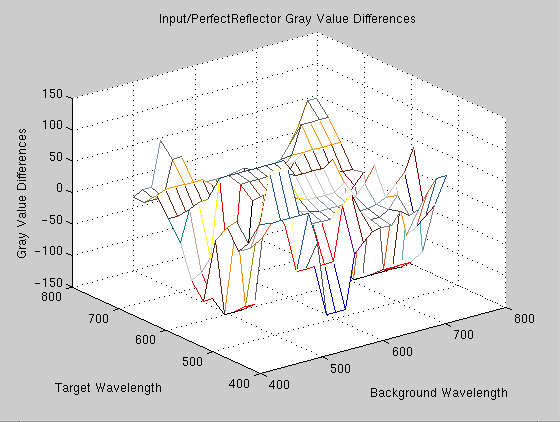
After we get the mean output values of R, G, B and Gray for all output images of Gray World algorithm, we can compute the difference of target colors between the original images and the algorithm output images. Since we know the R, G & B values are the same for all target patches in algorithm's output images, we can obtain the target colors from the output images by averaging the target patch in the upper left corner. Then we plot the differences relative to the background colors of the original image. The above process that compares the differences of inputs and Gray World algorithm outputs is done by PerfectReflectorCompare.m

We show the result plots as following and the data is stored in PRDiff.mat

From the plots, we can see the differences of inputs and algorithm outputs are around zero, except the most of differences of blue values are negative. There also have the large differences in some special area. The differences of gray values keep in [-120, 140].


Differences of Red Values

Differences of Green Values

Differences of Blue Values

Differences of Gray Values


Result Analysis 3 -- Compare Algorithm Difference with Camera Difference

After we get the following information:

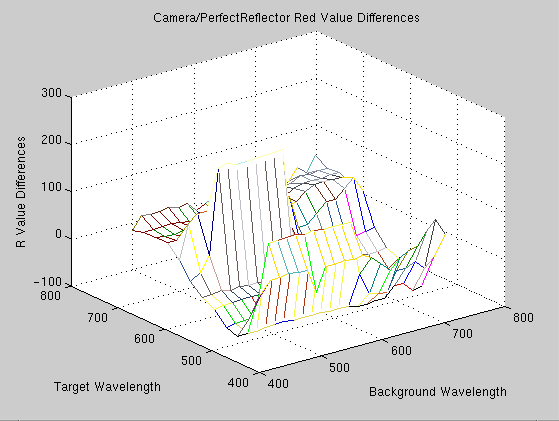
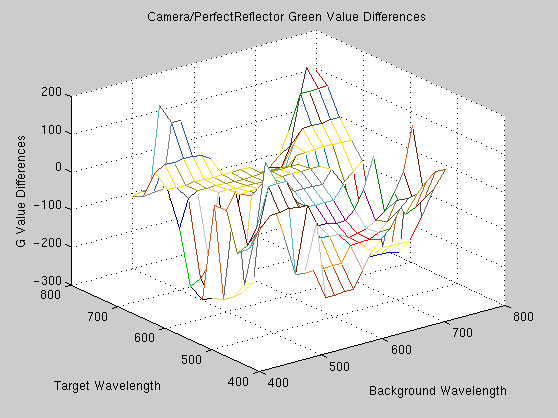
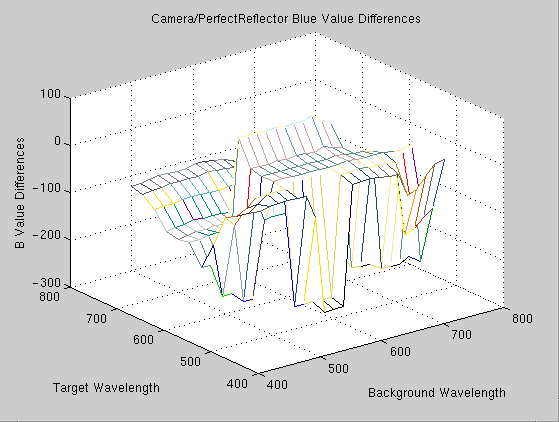
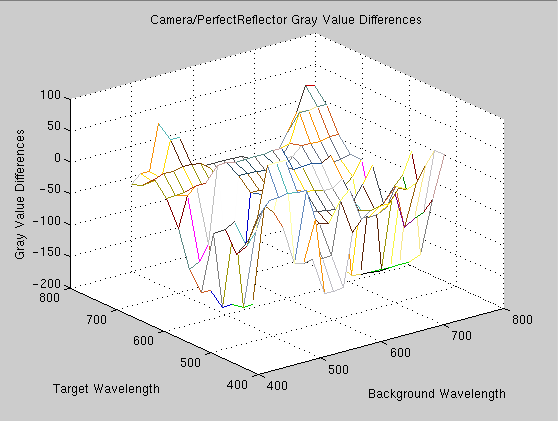
We can compute the differences of target colors of the algorithm output images and the camera output images. Then we plot the differences relative to the background colors of the original image. The above process that compares the differences of Gray World algorithm outputs and camera outputs is done by PerfectReflectorCompare.m

We show the result plots as following and the data is stored in PRDiff.mat

We can see the plots of differences of algorithm output and camera output have similar shapes. Although there are large differences values in some special area, the differences are around zero except Blue values that are negative in most cases. The differences of gray values of algorithm and camera outputs are in [-170, 100].


Differences of Red Values

Differences of Green Values

Differences of Blue Values

Differences of Gray Values


Result Analysis 4 -- Real Image

As we can see from Perfect Reflector Algorithm, adding a bright patch does bring in the obvious difference compare to the output image without the bright patch. As we said, the output image with bright patch is darker than the output image without bright patch because the one with bright patch scales down the images more than the one without bright patch.

From this result, we can see Perfect Reflector algorithm is not good at processing the images having small area of very bright part which does not reflect the light source, since it overscales the whole image just because of the presence of a small bright part.

We can not see the obvious difference for the camera output of these two images.

We list the R, G, B & Gray values for experiment 2 as following:

  • Stanford Tower without Bright Patch:

    R G B Gray
    Input
    0.4978
    0.4751
    0.4773
    0.4834
    Camera Output
    0.4539
    0.5179
    0.5666
    0.5128
    Perfect Reflector Output
    0.6489
    0.6204
    0.6167
    0.6286


  • Stanford Tower with Bright Patch:

    R G B Gray
    Input
    0.4990
    0.4775
    0.4796
    0.4853
    Camera Output
    0.4464
    0.5172
    0.5659
    0.5098
    Perfect Reflector Output
    0.5998
    0.5747
    0.5760
    0.5842


    trek@alumni.stanford.edu
    lihui@leland.stanford.edu