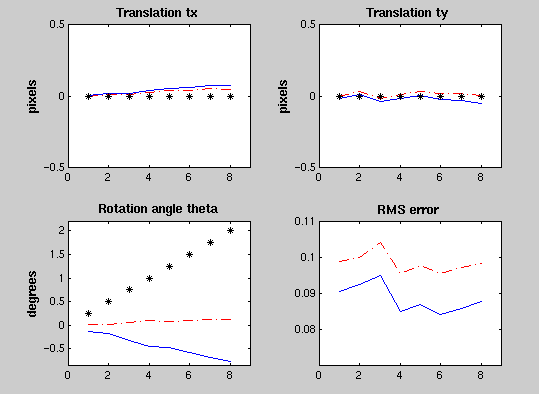

When the same set of rotations are applied to the Shepp-Logan phantom, neither
algorithm is able to estimate the rotation, as shown below. Once
again, despite the extra parameters available in the affine method,
the rigid-body registration has lower RMS error.
Algorithm performance on small rotations applied to the Shepp-Logan
phantom (theta<=2 degrees). The
format is the same as previous figures. Note that, although neither
method is correctly estimates the rotation angle, the
error is again consistently higher for the affine registration.
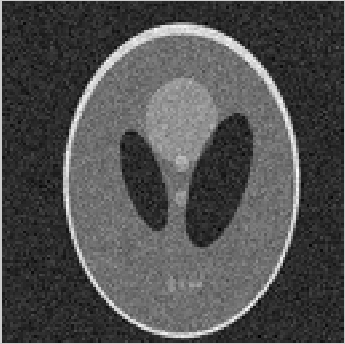
Upon inspecting the Shepp-Logan phantom, it is probably not surprising
that neither method performs well. Due to the fairly circular nature
of the phantom and dominantly low frequency content of the
image, rotations about the center of the image are difficult to
detect, even for the human observer. This is perhaps worrisome, given
that the Shepp-Logan phantom is meant to mimic the human
brain. However, the sulci and gyri found in the brain may provide
sufficient high frequency information to improve the performance on a
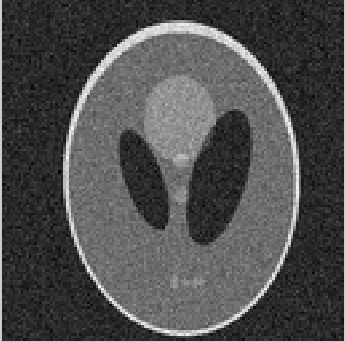
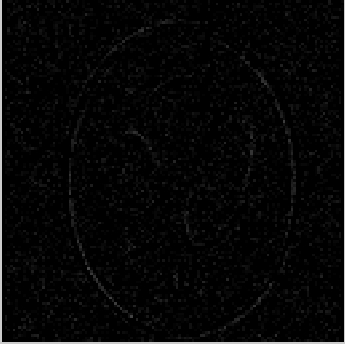
real subject. The rotated images are shown below, along with the
difference images in the same format as for the shape phantom.