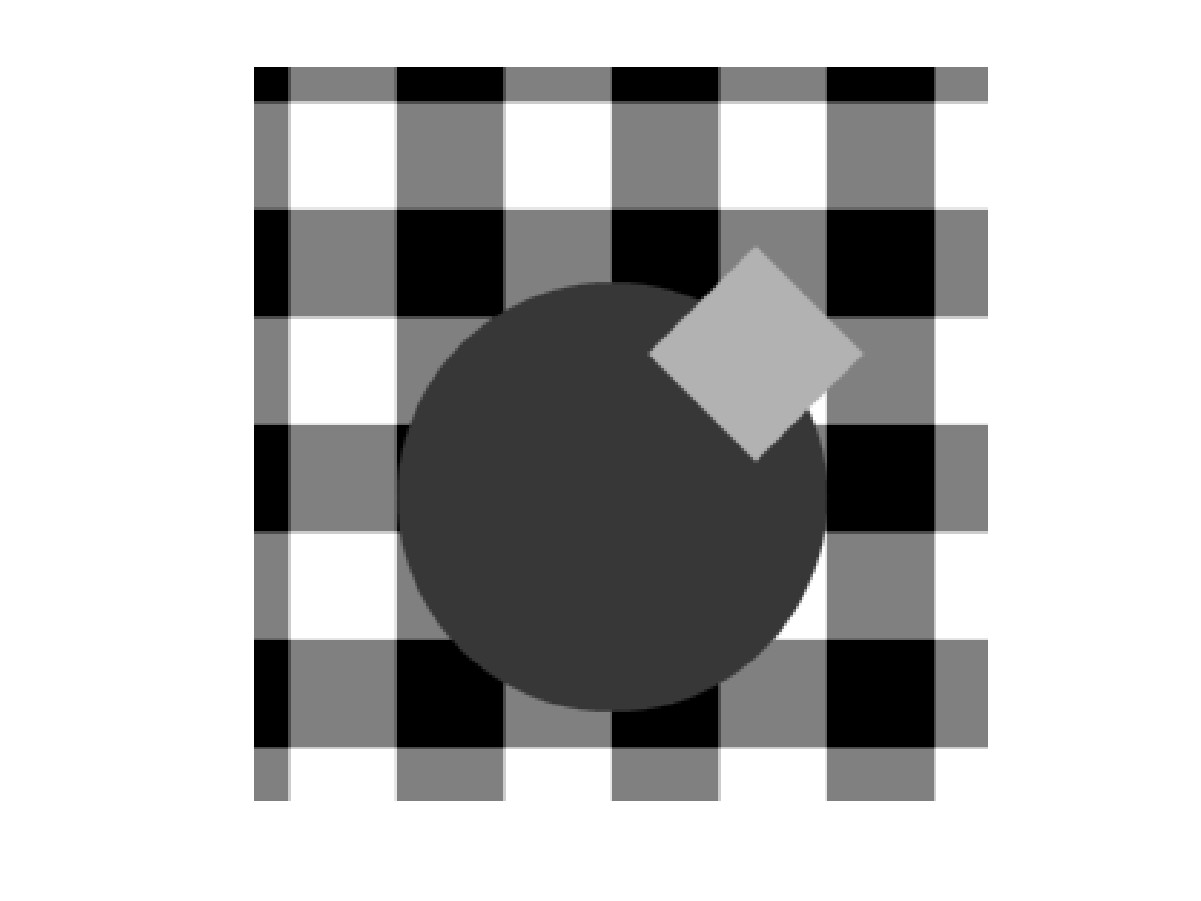
Rather than to just the two images where the estimator worked upon, the difference between the two images are shown. The output of the estimator is shown with some descriptions.
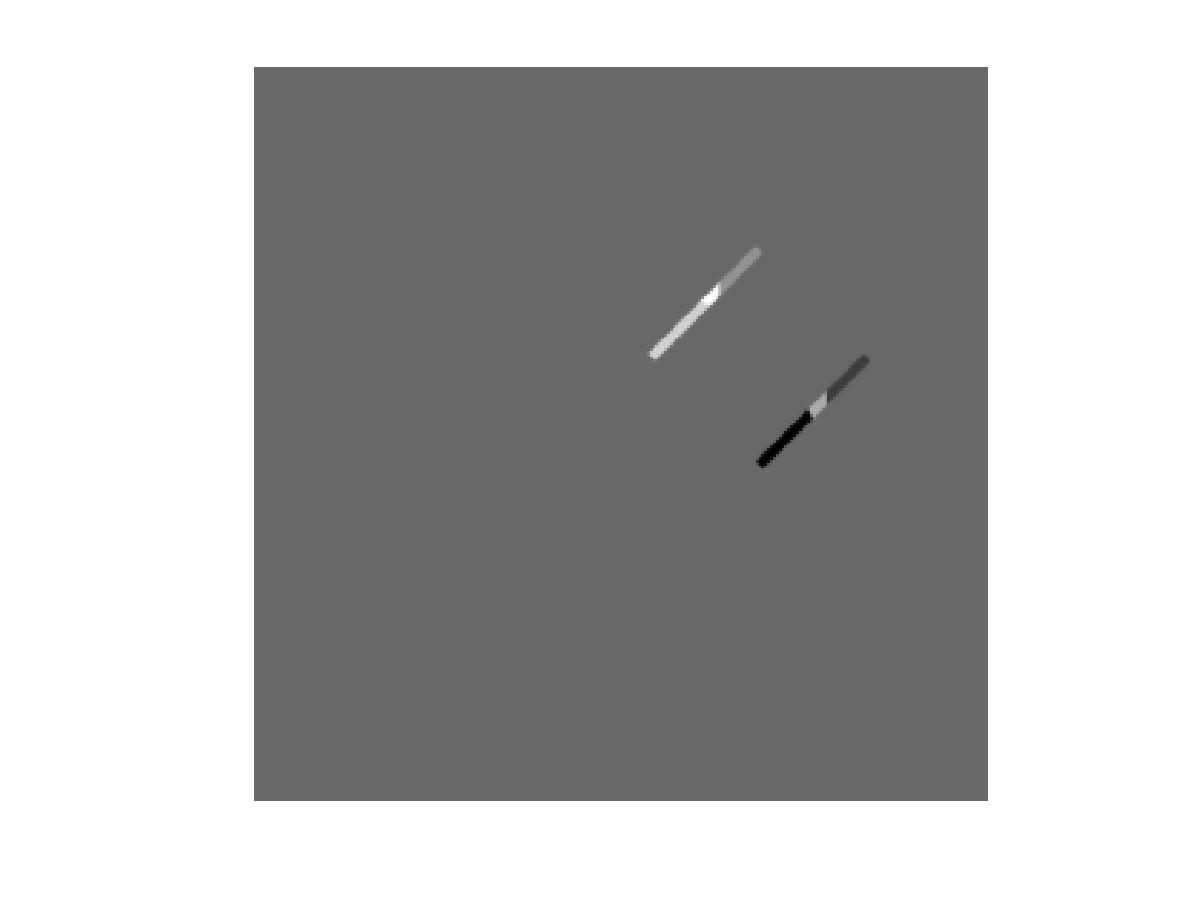
The estimator output was 2.461 pixels
east and 2.526 pixels south. This is rather a simple situation where only
the diamond moved. The estimate was fairly good in terms of accuracy. Although
occlusion problems occur in some places, the estimator can neglect these
problems because of relatively small difference.
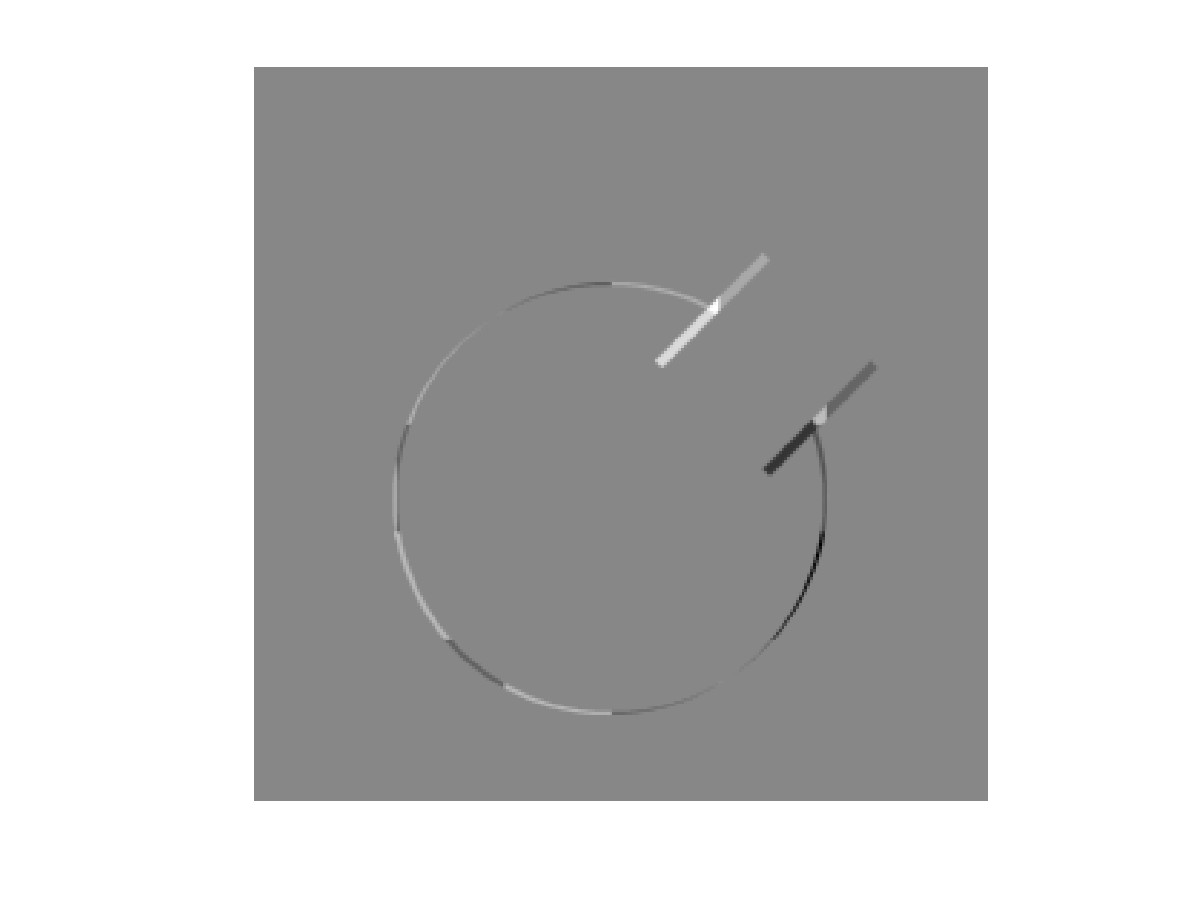
The estimator output for the diamond
was 2.3905 pixels south and 2.3352 pixels east. The estimator output for
the circle was 1.0946 pixels south and 1.7451 pixels west. Since two objects
are moving, the occlusion problem become more prominent. The estimator
output is still somewhat accurate.
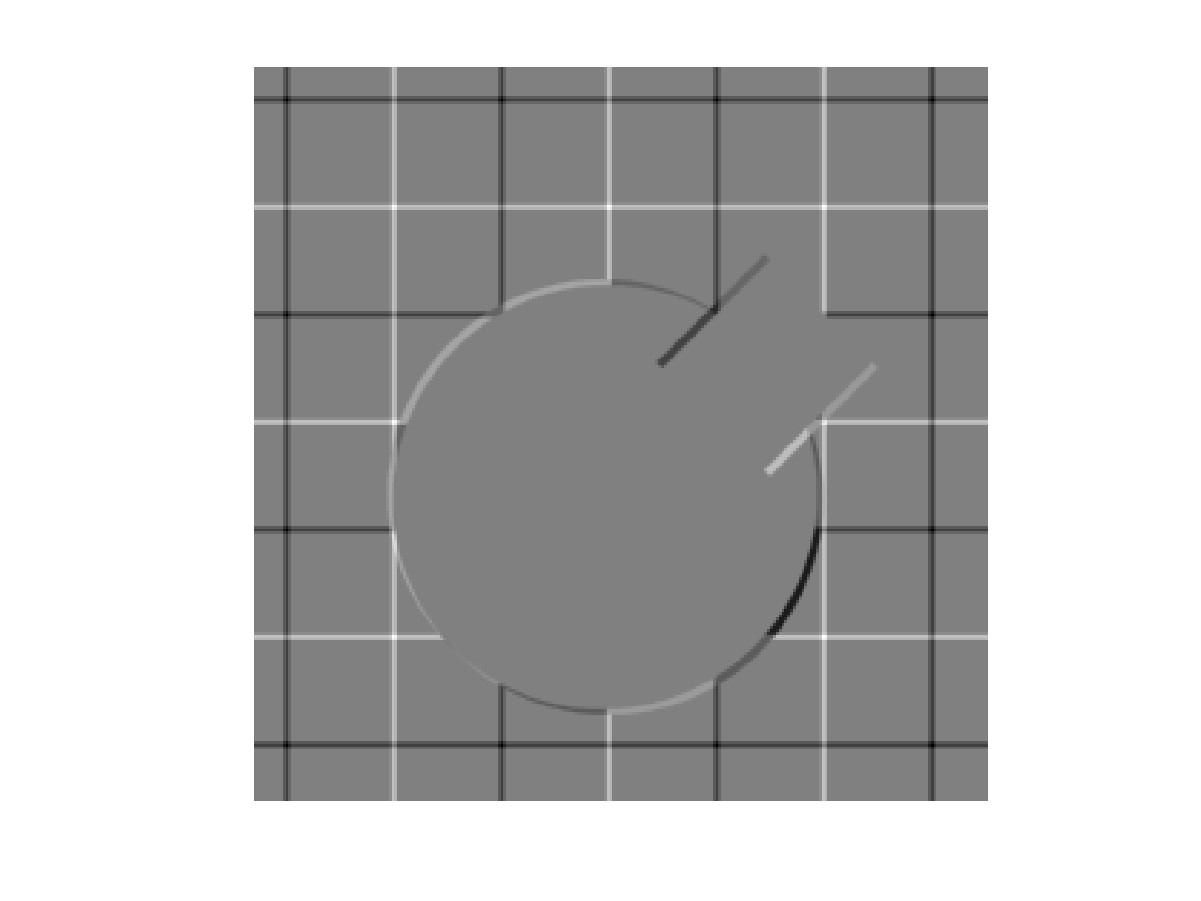
The estimator should output 2 pixels
south and 2 pixels east for this case. Most regions report that it has
moved 2 pixels south and 2 pixels east. However, for the regions in the
boundary of the image, the estimator report errorneous results because
the some region shrinked and some region grew. To alleviate this problem,
when estimating the global movement of the camera, the regions close to
the edge of images can be excluded from consideration.
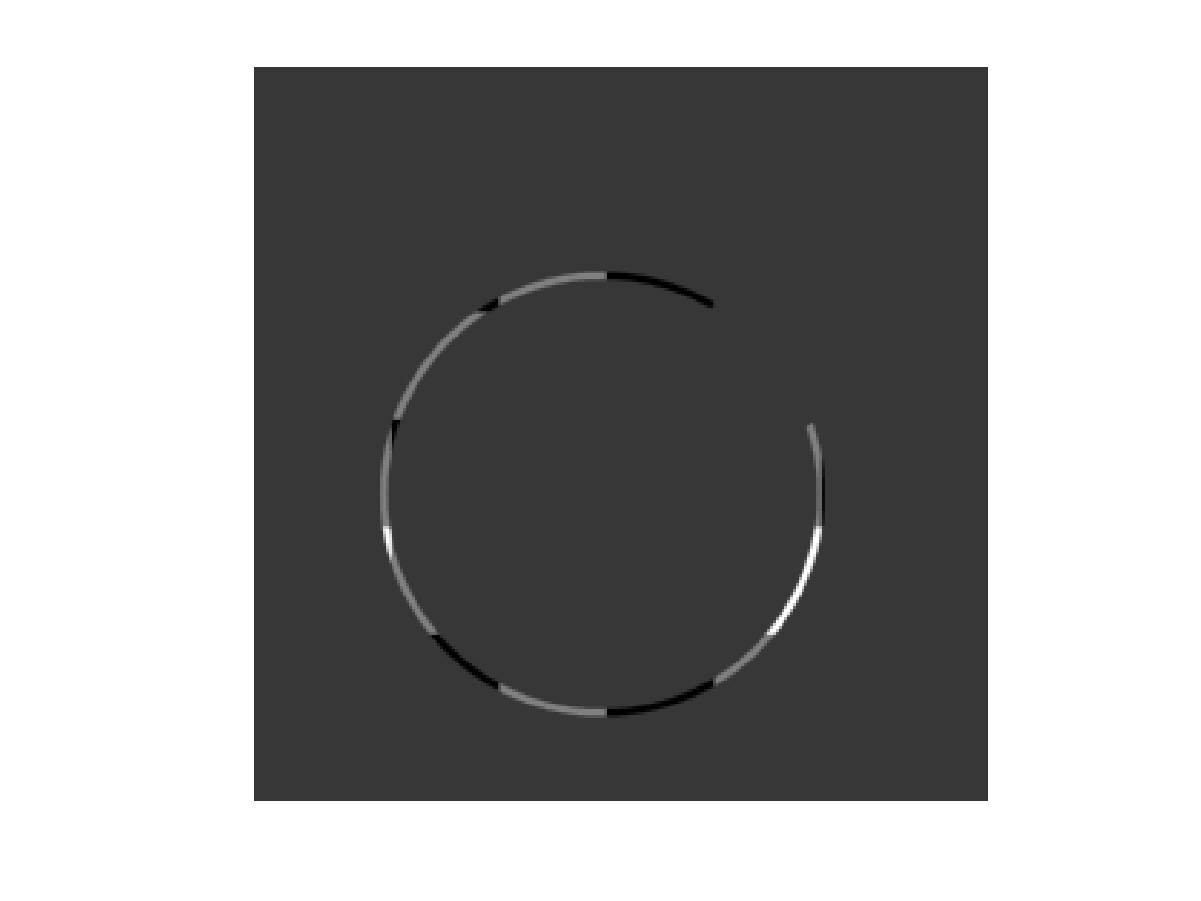
The estimator output 1.4649 pixels
increase in vertical direction and 1.7739 pixelx increase in horizontal
direction. This is fairly accurate. However, because of the occlusion problem,
it output a little erroneous output saying that it has moved 0.1868 pixels
north and 0.3897 pixels south. This is because of the diamond that has
created illusion to the estimator.
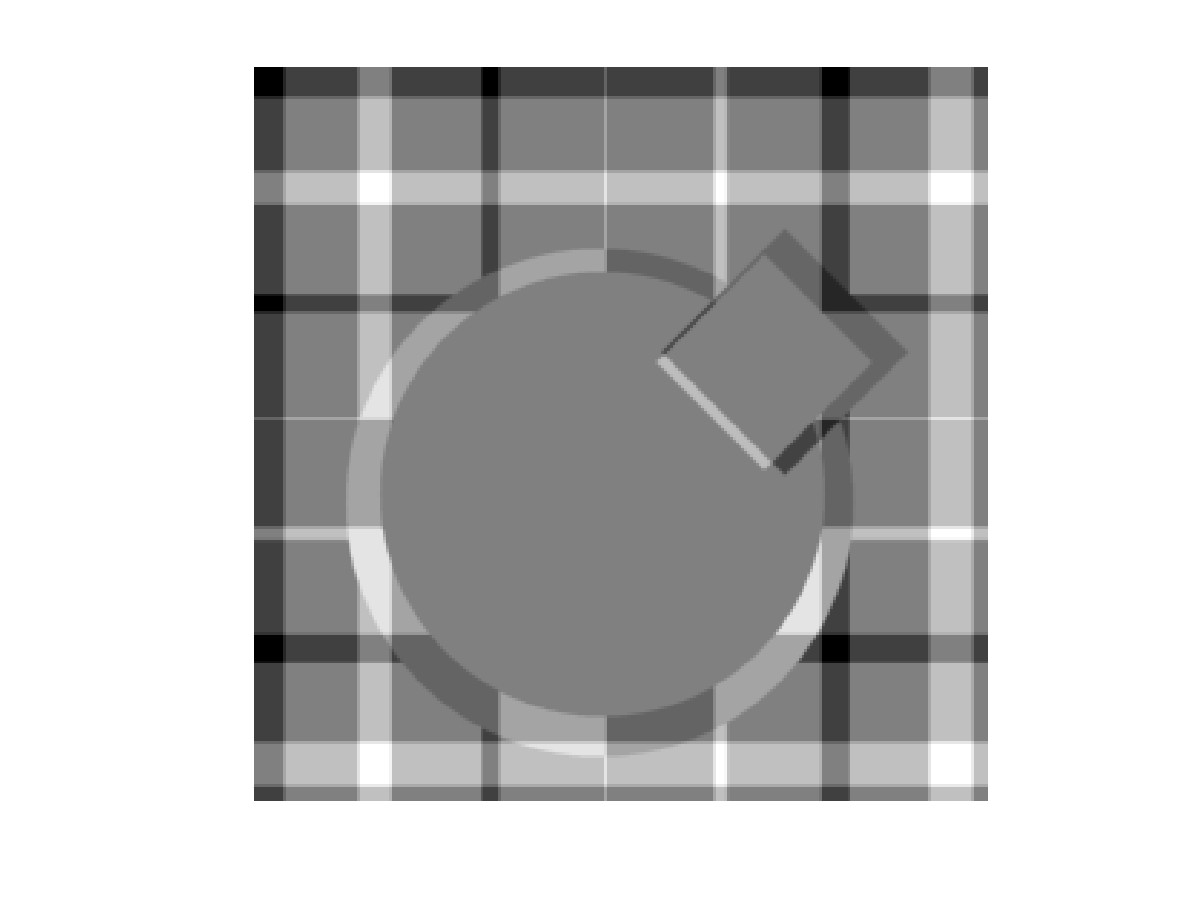
The estimator output on the average
11.3% magnification in terms of the second orders which is somewhat close.
However, the correspondence problem is hard for this problem where all
the objects move a large distance compared to previous example. So, the
algorithm will not work robustly if the high speed image assumption is
violated.